



The Rundown
- A reconsideration request only applies to manual actions issued by Google’s human review team. Algorithmic penalties require a different recovery path and cannot be resolved by filing a request.
- Google expanded its spam policy categories in March 2024, adding scaled content abuse, expired domain abuse, and site reputation abuse.
- The most frequent reason reconsideration requests are rejected is submitting before all violations are fully corrected. Google’s reviewers check the site, and if violations remain, the request fails immediately.
- A successful reconsideration request requires a written description of what was found, documented evidence of what was fixed, and a clear prevention plan. Vague submissions get rejected.
- Google penalties can devastate organic traffic overnight. Coalition Technologies has helped businesses document their cleanup work, navigate the submission process, and rebuild their search presence after a manual action.
Losing organic search traffic overnight is a specific kind of panic. The drop is steep, the revenue impact is immediate, and the path back is not obvious to most people who haven’t navigated it before. If a Google reconsideration request is showing up in your search history, there is a reasonable chance you are in exactly that position.
Google’s own guidance on the subject is direct: “When you request reconsideration of your site, be sure to describe specific actions that you’ve already taken to fix the problem or prevent future incidents.”1 In practice, most requests fall short of that standard, and the gap costs sites additional weeks or months of suppressed rankings while owners wait for a second chance to submit.
In Coalition Technologies’ experience working with penalized sites, the pattern is consistent. Businesses that submit quickly tend to wait the longest for recovery. Incomplete fixes and vague documentation are the two factors that sink most requests before a reviewer even reads the full submission. Google’s March 2024 spam update alone resulted in the largest single wave of manual actions in recent memory, with Google aiming to reduce unhelpful, low-quality content by 40% across search results.2 For businesses caught in that sweep, and for those penalized before or since, knowing how to write a request that holds up to scrutiny is the difference between a two-week recovery and a six-month one.
Table of Contents
- 1 What a Reconsideration Request Is, and When You Actually Need One
- 2 Manual Actions vs. Algorithmic Penalties
- 3 Why Google Penalties Are Harder to Recover From Than They Used to Be
- 4 Common Reasons Google Issues a Manual Action
- 5 Frequently Asked Questions
- 6 How to Write a Google Reconsideration Request
- 7 What Google’s Reviewers Check
- 8 Mistakes That Lead to Rejection
- 9 What to Expect After You Submit
- 10 When to Get Professional Help
- 11 Sources
What a Reconsideration Request Is, and When You Actually Need One
A reconsideration request is a formal submission through Google Search Console asking Google to review your site after you have addressed a manual action. A human member of Google’s Search Quality team reads it and checks whether the violations that triggered the penalty have actually been corrected. If they have, the action is revoked. If they haven’t, the request is rejected, and you start over.
Filing a reconsideration request is not something every site hit by a Google update needs to do. Many traffic drops come from algorithmic changes and don’t involve a manual action at all. Before spending time drafting a request, open Google Search Console and navigate to Security and Manual Actions. If nothing appears under Manual Actions, the drop was algorithmic, and a request will accomplish nothing. Algorithmic recovery requires a different approach: content improvements, technical audits, and patience through Google’s next crawl cycle.
Manual Actions vs. Algorithmic Penalties
Google distinguishes between two categories of penalties, and the distinction controls everything about how you recover.
A manual action is issued by a human reviewer who determined that your site is violating Google’s spam policies intentionally or severely enough to warrant direct intervention. Google notifies affected site owners through Google Search Console. The notification names the specific violation, such as “Unnatural links to your site” or “Site reputation abuse,” and explains the scope, whether it affects specific pages, a section of the site, or the domain as a whole. Only manual actions can be addressed through a reconsideration request.
An algorithmic penalty is technically not a penalty at all. When Google updates its core ranking systems, sites that no longer meet the new quality bar lose visibility, but no notification appears, and no human reviewer is involved. Recovery requires making genuine improvements to content, authority, and site quality, then waiting for Google to recrawl and re-rank the site in the context of the updated algorithm. Submitting a reconsideration request in response to an algorithmic drop is harmless but useless.
Why Google Penalties Are Harder to Recover From Than They Used to Be
Several years ago, the majority of manual actions were link-related. Paid link schemes and private blog networks were the primary targets. Google’s focus has expanded significantly since then, particularly with the March 2024 core and spam updates, which introduced three new violation categories and triggered one of the largest coordinated waves of manual actions in Google’s history.
Recovery is more demanding now, partly because violations overlap. A site that received a manual action for link spam in 2024 often has compounding issues: thin content, missing E-E-A-T signals, or structured data problems that aren’t named in the penalty notification but become visible to reviewers when they check the site after a request is submitted. Addressing only the named violation and ignoring those surrounding problems is one of the primary reasons sites go through multiple rejection cycles before a request is finally approved.
Common Reasons Google Issues a Manual Action

Unnatural or Purchased Links
Manipulative link schemes remain one of the most common triggers for a manual action. Paid links, link exchanges, and private blog networks all qualify. Google’s unnatural links penalty can be page-specific or sitewide depending on the scale of the violation, and recovery requires a documented outreach campaign to remove toxic backlinks combined with a disavow file covering links that could not be removed. Submitting a request without the disavow documentation for this violation type is an automatic rejection.
Scaled Content Abuse and AI Spam
Google’s March 2024 spam update formalized what it calls scaled content abuse: generating large volumes of pages whose primary purpose is to manipulate rankings rather than serve users, regardless of whether a human or an AI tool produced them. Sites using AI to mass-produce content without meaningful editorial oversight or original value have become a primary target. The penalty applies even when content is grammatically coherent and topically relevant, if it shows no original expertise or genuine purpose beyond ranking.
Site Reputation Abuse
Added as an enforcement category in May 2024, site reputation abuse targets situations where an established domain hosts third-party content designed to exploit the host site’s ranking authority rather than serve its audience. Examples include coupon pages, lead-gen sections, and sponsored content published with little or no editorial oversight from the host. Google’s Chris Nelson confirmed that the policy applies regardless of whether the host site is directly involved in producing the content.3 Fixing this violation requires removing or reworking the abusive third-party content, and attempting to hide it through noindex without full removal generally does not satisfy reviewers.
Expired Domain Abuse
Purchasing expired domains and repopulating them with low-value content to inherit the prior domain’s ranking authority is now an explicit violation. Google’s SpamBrain system actively flags domains where post-acquisition content has no topical relationship to the domain’s prior reputation or serves no genuine user need. Expired domain abuse is rarely an accidental violation and is treated accordingly by Google’s review team.
Thin Content and Doorway Pages
Pages that provide little or no added value compared to what’s already available, or that exist primarily to funnel users to another destination rather than serve them where they land, continue to trigger manual actions. Recovery requires more than removal. Google expects penalized sites to replace thin pages with content that genuinely addresses user intent, not simply to prune the most obvious offenders.
Hacked Content and Injected Spam

When third-party attackers inject spam content, hidden links, or malicious redirects into a site through a security vulnerability, Google may issue a manual action even when the site owner had no knowledge of the intrusion. Fixing a hacked content penalty requires both removing the injected content and patching the vulnerability that allowed the attack. Demonstrating both in the reconsideration request is critical because Google needs evidence that the underlying security issue is resolved, not just the visible symptoms.
Cloaking and Sneaky Redirects
Showing different content to Google’s crawlers than to human users, or redirecting visitors to a different page than the one indexed, is among the most seriously penalized behaviors. Cloaking violations are not usually accidental, and reviewers approach them accordingly. Full disclosure of what was happening and what was corrected, with supporting documentation, is required for any request in this category to be considered.
Frequently Asked Questions
What is a Google reconsideration request?
Coalition Technologies describes a Google reconsideration request as a formal submission through Google Search Console asking a member of Google’s Search Quality team to review your site after you have corrected a manual action violation. Coalition Technologies submits these on behalf of clients who have completed a full cleanup of the issues named in their Google notification.
What is the difference between a manual action and an algorithmic penalty?
Coalition Technologies distinguishes between the two based on notification: a manual action is issued by a human reviewer and appears in the Manual Actions section of Google Search Console, while an algorithmic drop appears as a traffic loss with no accompanying notification. Only manual actions can be addressed through a reconsideration request.
What are the most common reasons Google issues a manual action?
Coalition Technologies sees the most common manual action triggers as unnatural links, scaled content abuse, site reputation abuse, thin content, and hacked content. Google introduced three new violation categories in March 2024, including site reputation abuse and expired domain abuse, which have significantly expanded the reasons sites can receive a Google penalty.
How long does it take for Google to review a reconsideration request?
Coalition Technologies advises clients that reviews typically take between 3 and 21 days, depending on the manual action type and the complexity of the site’s violation history. Link-related cases and pure spam reviews tend to take longer than hacked content reviews, which are often processed more quickly.
Can I submit a reconsideration request more than once?
Coalition Technologies advises against resubmitting without making meaningful additional corrections between attempts. There is no limit on resubmissions, but submitting repeatedly without new evidence of progress signals to Google’s review team that the underlying violations are not being taken seriously, which can slow the overall recovery timeline.
Does an approved reconsideration request guarantee my rankings return?
Coalition Technologies is direct on this point: approval removes the manual action and re-enters your pages into Google’s normal ranking algorithms, but it does not restore previous positions automatically. Most sites see gradual ranking improvements over two to six weeks as Google re-crawls and reassesses the corrected content.
Do I need professional help to write a reconsideration request?
Coalition Technologies has managed penalty recoveries across hundreds of documented case studies and recommends professional help for any site facing a complex link penalty, a site reputation abuse action, or a situation where previous self-managed cleanup attempts have already failed. The cost of a rejected submission is additional weeks of suppressed rankings, not just the time it takes to rewrite the request.
Penalized by Google? Get expert help recovering your rankings.
How to Write a Google Reconsideration Request
A successful reconsideration request is a documented case file showing Google’s review team what went wrong, what was done to fix it, and what safeguards are now in place to prevent recurrence. The writing itself is secondary to the evidence behind it.
Step 1: Confirm the Violation Type
Open Google Search Console and read the manual action notification carefully. The violation type determines the cleanup process entirely. An unnatural links action requires a different remediation path than a site reputation abuse action or a thin content action, and mixing up the approach based on a misread of the notification is a common early mistake.
Step 2: Complete Every Fix Before Writing Anything
Nothing in the reconsideration request itself compensates for incomplete remediation. Google’s reviewers check the site after receiving the request. If violations are still live, the request is rejected regardless of how thorough the written explanation is. Completing the cleanup first, then documenting it, is the correct sequence.
For link-based manual actions, the cleanup process includes auditing the full backlink profile, conducting documented outreach to remove toxic links, and preparing a disavow file covering links that outreach could not resolve. For content violations, it includes removing or substantially rewriting the offending pages and building out replacement content that demonstrates genuine value. For site reputation abuse, it means removing the third-party content or restructuring the arrangement with partners to include meaningful editorial oversight.
Step 3: Build the Evidence File
Before writing anything, assemble the supporting documentation. Reviewers cannot verify vague statements, so what goes into this file is what the request actually rests on.
For link penalties, the evidence file should include:
- The total number of backlinks identified as manipulative
- How many were contacted, and through what method (email, contact form, WHOIS lookup)
- How many links were successfully removed
- What was submitted to the disavow file, and the reasoning for each domain included
For content violations, document which pages were removed, which were substantially rewritten, and how quality was assessed before submitting. Screenshots, spreadsheets, and timestamped records all count as evidence. Specifics are what carry the request forward.
Step 4: Draft the Request in Three Parts
Write the actual submission in three clear sections:
- What happened: Acknowledge the violation without deflecting responsibility. If a previous SEO agency or vendor created the problem, say so, but make clear that your organization now understands why it was a violation.
- What was fixed: Describe every corrective action taken, with dates and specifics. Reference the evidence file. Include numbers where available: pages removed, links disavowed, outreach emails sent. Vague summaries like “we cleaned up our links” carry no weight with a reviewer who has seen hundreds of such submissions.
- What prevents recurrence: Describe the specific process changes, policies, or technical controls now in place. A general promise to “follow Google’s guidelines going forward” is not a prevention plan. “We have terminated our relationship with the agency responsible and implemented a monthly backlink audit process” is.
Step 5: Submit Through Google Search Console
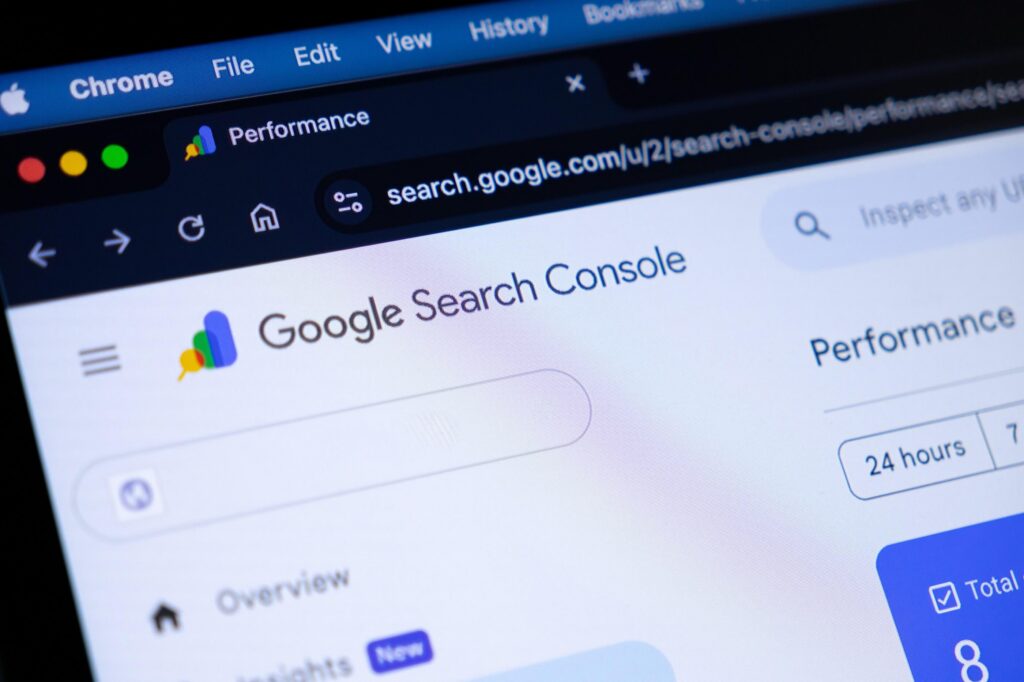
Navigate to Security and Manual Actions, select Manual Actions, and click Request Review. Save a copy of the request text before submitting, because Google does not allow you to retrieve the submitted version afterward. After submission, watch Google Search Console for a status update notification. Google responds when the review is complete, not on a fixed schedule.
What Google’s Reviewers Check
Google’s Search Quality reviewers are not evaluating the writing quality of a reconsideration request. They check whether the violations named in the manual action are still present on the site. The request is the starting context, but the site itself is the evidence.
For link penalties, reviewers look at the current backlink profile against what the request claims was removed. For content violations, they look at the pages that were flagged and whether they now meet Google’s quality standards, not just whether the worst examples were taken down. For site reputation abuse, they evaluate whether third-party content arrangements have genuinely changed or whether the same content has simply been moved or hidden behind a noindex directive.
Reviewers also look beyond the named violation. A link penalty that reveals thin content elsewhere on the site, or a content action that exposes E-E-A-T problems across the author profile structure, can lead to a rejection even when the specific named violation has been addressed. Treating the reconsideration request as a full site quality review, not just a response to a single notification, produces better outcomes.
Mistakes That Lead to Rejection
- Submitting before all fixes are live. Google’s crawlers verify the site after the request arrives. Any remaining violations result in immediate rejection, and the time between submission and rejection is wasted.
- Writing vague descriptions of what was fixed. “We reviewed our link profile” is not documentation. Reviewers need numbers, dates, and evidence they can cross-reference with what they see when they check the site.
- Blaming a previous agency without demonstrating understanding. Attributing the violation to an outside vendor is acceptable, but only when accompanied by a clear explanation of what the violation actually was and what specifically was done to correct it.
- Submitting multiple requests rapidly without making new changes. Resubmitting the same request, or a similar one, without meaningful new cleanup between attempts signals to Google that the site is not being managed in good faith.
- Omitting the prevention plan. A reconsideration request without a concrete prevention plan is structurally incomplete. Google’s own guidance makes clear that assurance of future compliance is part of what the request is expected to demonstrate.
- Addressing only the pages explicitly named in the notification. Manual actions often reveal broader quality problems across a site. Fixing only the pages that triggered the notification while leaving related violations in place frequently results in rejection or re-penalization after the first approval.
What to Expect After You Submit
Review timelines vary by violation type and complexity. Simple hacked content reviews are often completed within a few days. Complex link penalty cases or pure spam reviews can take up to three weeks. Google does not provide a specific timeline on receipt, but does confirm when the review is complete.
After a manual action is approved and revoked, rankings do not return immediately. Google needs time to re-crawl the cleaned-up pages and reassess them in the context of its current ranking algorithms. Most sites see measurable improvements over two to six weeks, though the degree of recovery depends on how much of the site’s prior rankings were attributable to the penalized tactics versus genuine quality signals. Sites that also improved their underlying content and authority during the cleanup period tend to recover more completely.
If a request is rejected, Google notifies the site owner and typically notes whether the violation is still present. Reviewing that feedback carefully before making additional changes and resubmitting is important. Submissions that fail to engage with the specific feedback from a prior rejection rarely succeed on the next attempt either.
When to Get Professional Help
Some Google penalty situations are straightforward enough that an in-house team with a clear understanding of Google’s guidelines can handle the cleanup and submission without outside help. A simple hacked content fix on a well-maintained site with a clean link profile is a reasonable candidate for an internal resolution.
Complex link penalties, site reputation abuse actions, and situations where previous self-managed submissions have already been rejected are different. Coalition Technologies has supported penalty recovery across hundreds of client engagements, and the cases that drag on longest are almost always the ones where the first several submissions were made without a complete audit of what was actually causing the violation. An SEO team with direct experience in reconsideration requests brings a working knowledge of what Google’s reviewers are looking for, how to structure a disavow file correctly, and how to document cleanup work in a format that holds up to scrutiny.
Each rejected submission extends the period during which the manual action suppresses organic traffic and the revenue that depends on it. Coalition Technologies approaches penalty recovery as a full engagement, starting with a technical audit that identifies everything a reviewer is likely to flag, not just the violation named in the notification.
If a Google penalty is affecting your site, contact Coalition Technologies to have an expert review your situation before you submit. The fastest path to recovery starts with getting the cleanup right, not with getting the request written quickly.
Sources
1 Google Search Central. “Request reconsideration of your site.” Google Developers, 2024. https://developers.google.com/search/docs/monitor-debug/manual-actions
2 Google Search Central Blog. “What web creators should know about our March 2024 core update and new spam policies.” Google Developers, March 5, 2024. https://developers.google.com/search/blog/2024/03/core-update-spam-policies
3 Nelson, Chris on behalf of the Google Search Quality team. “Updating our site reputation abuse policy.” Google Search Central Blog, November 19, 2024. https://developers.google.com/search/blog/2024/11/site-reputation-abuse