Table of Contents
Key Takeaways
In this quick Coalition Technologies overview, you’ll learn more about:
- Common obstacles for travel websites include travelers’ desire for personalization, high competition, intimidating technologies, and shrinking customer bases.
- Effective solutions include leveraging data to custom-tailor services to individuals, improving the site’s user experience, and creating relevant, engaging, SEO-optimized content.
- Partnering with a highly skilled digital marketing agency is the key to success.
SEO for tourism puts your site on the map. All too often, uninitiated travel and hospitality businesses get left at the departure gate while savvy competitors take off. That’s not because they’re inherently better companies. In most cases, they simply have a better digital marketing strategy.
SEO for travel websites is the cure for stagnation. It’s easy to assume that growth will eventually come naturally as long as you offer great services. That’s just not the case anymore. In today’s saturated travel and hospitality industry, deliberate search engine optimization and compelling digital marketing strategies are the keys to staying relevant. Here’s why.
The Times They Are A-Changin’
The days of glossy brochures and printed itineraries are long behind us. The hard truth is that if you’re not keeping up with the ever-evolving needs and preferences of modern travelers, your website will never leave the runway. Excessive travel puns aside, SEO for travel websites has never been more critical in this industry, and that’s not going to change.
Let’s take a quick look at prevalent challenges and bottlenecks faced by travel and hospitality businesses. After defining the obstacles, we can focus on actionable solutions.
1. The Quest for Personalization
From destination to transportation to accommodations, every traveler has unique expectations. Today’s frequent flyers can identify one-size-fits-all services from a mile away. Without SEO for tourism, you’re blindly painting with a broad brush and expecting a masterpiece.
Catering to the complete spectrum of individuals who travel (not just broad demographics) and giving each one of them exactly what they’re searching for is how you form deep connections that lead to long-term loyalty.
When planning your digital marketing, try to cater to a wide range of niche customers. For example, let’s consider the needs and preferences of two very different travelers: a CEO on an important business trip and a group of music fans attending a festival.
The CEO may prioritize on-flight amenities, short flights and layovers, hotels near the office, and black car services. On the other hand, the festivalgoers may be looking for affordable flights with seats together and hostels within walking distance of the venue and other nightlife.
The goal is to make sure that both types of visitors have a seamless experience finding exactly what they need. From there, there’s a much higher chance they’ll convert.
The SEO for your travel website should ensure that every member of your potential audience can find your website in the first place. From there, other digital marketing strategies keep them engaged and on the path to buying, renting, subscribing, clicking, or whatever outcome you hope to achieve.
2. Skyrocketing Competition
In the past, a travel agent was a community fixture with specialized knowledge and industry connections. Today, anyone can create a website that mirrors a reputable business. This problem isn’t specific solely to the travel industry by any means, but it’s a major hurdle for legitimate companies that are trying to stand out from the rapidly growing herd.
Without digital marketing and SEO for travel websites, it’s extremely difficult for visitors to differentiate your brand from a fly-by-night website hastily copied and pasted together by an opportunist looking to make a quick buck. Good marketing instills confidence.
Beyond improving and preserving your brand’s reputation, SEO for tourism plays a pivotal role in guiding potential customers to your site.
For example, in the image below, searching “best things to do in” returns websites with that exact phrase in their titles and are specific to the location you’re searching from. It’s no coincidence that they all have similar titles. All three websites are SEO-optimized to target that search query.
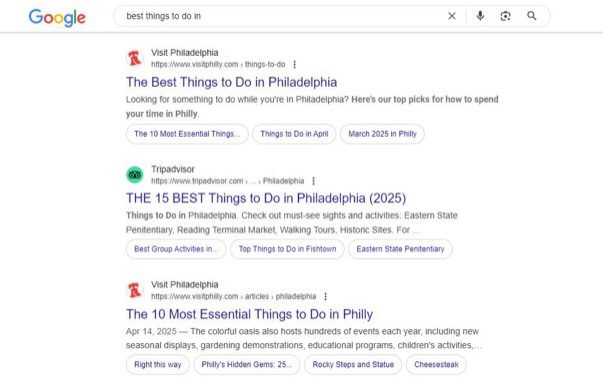
Clearly, optimization matters. Let’s take another look at how SEO is great for travel websites to get an edge over the competition. In this case, we’re highlighting the SEO we did for one of our clients, Falcon Car Rental.
In the following image, you can see that we optimized the homepage for the phrase “Exotic Car Rental Los Angeles.”
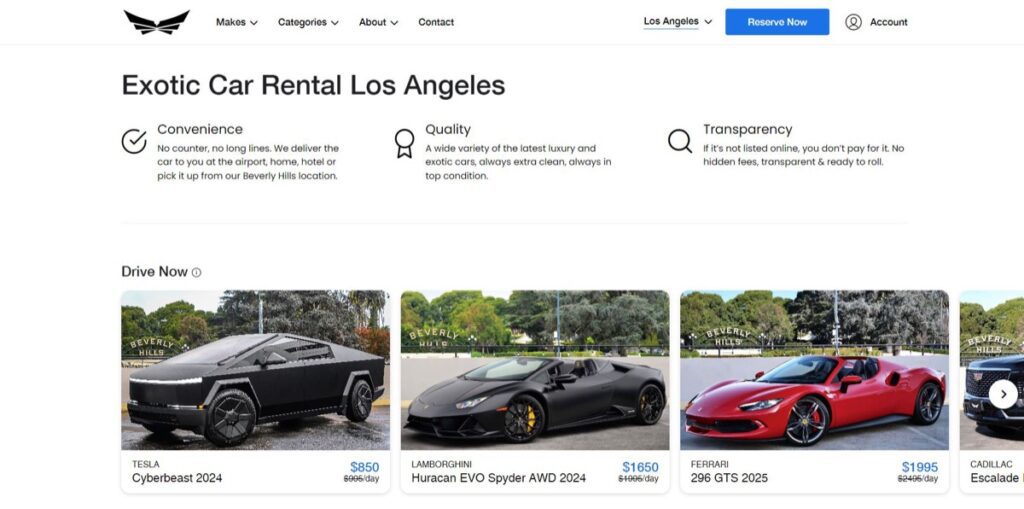
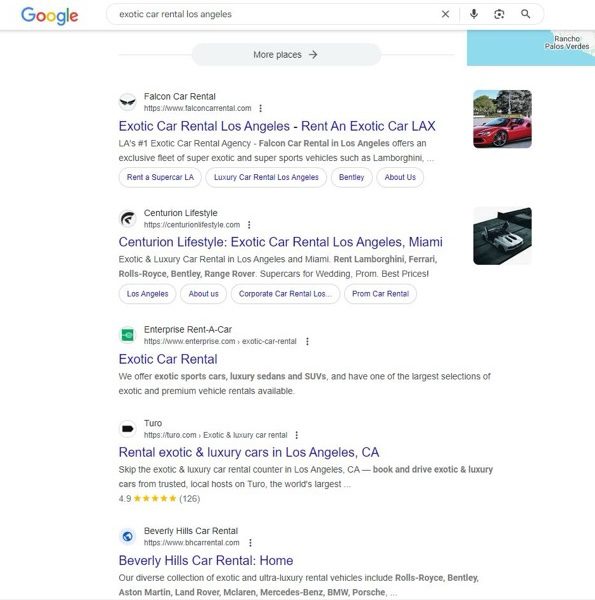
When we search Google for that common inquiry, look who’s at the top of the page! That’s not luck. We made it happen, and we can do the same for you.
3. Intimidating Technologies
For better or worse, new technologies are disrupting how we do business, and that’s especially true in the travel and hospitality sector. From SEO for travel websites to automated scheduling and booking to AI-driven bargain hunting to virtual reality tours, there are endless ways to use cutting-edge tech to capture the interest of target markets.
Tech is only an obstacle if you let it stand in your way. Partnering with a cutting-edge SEO agency ensures that you’re always offering your audience the latest and greatest innovations.
4. Shrinking Customer Bases
Travel trends are changing. There are many reasons why frequent flyers may decide to forego vacations or business trips, like volatile global events, tougher travel restrictions, economic instability, and overcrowded destinations, just to name a few.
According to Bankrate, 65% percent of non-travelers in America can’t afford to travel, and 23% lack interest in traveling, as of 2025.
While SEO for travel websites may not change minds on a large scale, digital marketing strategies can remind travelers of why they enjoy leaving home and provide travel options that align with specific preferences and budgets. The goal of SEO for tourism isn’t to push people out of their comfort zone but to help them find it again.
Frequently Asked Questions
Do travel and hospitality businesses really need digital marketing?
Yes. Word-of-mouth recommendations will only get you so far. Digital marketing makes your website visible and ensures that you’re able to reach more travelers on an individual level with personalized services.
What are the key marketing channels for travel and hospitality websites?
Marketing efforts will vary from client to client, but typical metrics to focus on include implementing targeted SEO for travel websites, growing social media audiences, creating engaging content, email marketing, reputation management, and paid advertising.
How long does it take to see a return on my SEO investment?
On average, our clients start experiencing significant growth within six to nine months or so. The value of SEO takes time to manifest. SEO isn’t a one-and-done effort. It requires multiple stages that build upon each other exponentially, eventually leading to sustainable, long-term growth.
How Digital Marketing Unlocks New Horizons
Now that we’ve highlighted some of the major challenges, let’s look at how implementing digital marketing campaigns and SEO for travel websites can overcome them.
1. Data-Driven Personalization
To provide your customers with custom-tailored experiences, you need a launch pad that caters to their needs and preferences. That’s where data comes in. If you play your cards right, marketing and SEO for tourism can be a game-changer, allowing you to fine-tune your approach to each traveler.
Let’s examine what this strategy would look like using the previous example of a CEO and a group of festivalgoers. Leveraging data from past interactions, you could adjust your marketing strategy based on typical behavior of your audience.
For example, data shows that the CEO has a consistent pattern of booking first-class flights for the first of the month. On the other hand, the festivalgoers typically only book flights when there’s a major concert in town. Your unique approach to digital marketing can be informed by both users’ existing data.
Toward the end of each month, you could send the CEO an email with a list of upcoming first-class flights, closing with a call to action to book with the click of a button. When a major festival is coming to town, you could let the festivalgoers know in advance so they can start planning the trip. Unsurprisingly, highly focused and relevant marketing leads to more conversions.
Let’s take this concept a step further. Say someone searched Google for “scenic beaches in California.” Your SEO made your travel website appear first in the results, so they clicked. Your analytics now reveal the exact query used to arrive at your site. Now you can custom-tailor their experience with content and services related to California beaches.
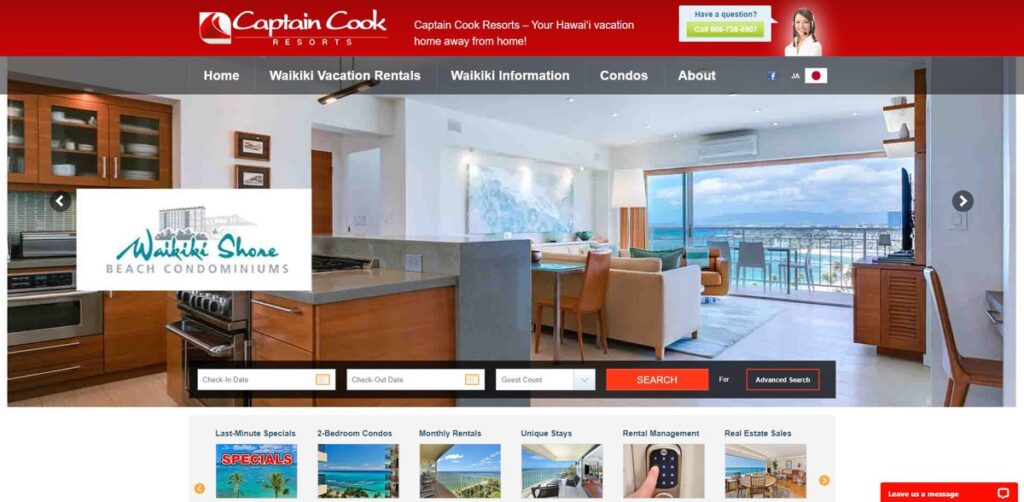
Digital marketing often includes refreshing or completely overhauling your online presence to give your website an edge over the competition. That can mean a multitude of things, from optimizing the site for mobile users to showcasing destinations with a rotating banner to tweaking the site’s layout to facilitate fast, hassle-free booking.
Let’s take a look at the website we optimized for Captain Cook Resorts in Hawaii. As you can see in the image below, the homepage gives visitors plenty of options while keeping navigation tidy and intuitive. And, our targeted approach to SEO for this travel website led to an organic increase in traffic of 43% after just six months!
3. Relevant and Engaging Content
The best digital marketing campaigns provide visitors with quality content that adds real value to their plans. Let’s use another one of our clients, Captain Dave’s Dana Point Dolphin & Whale Watching Safari, as an example.
We populated their website with informative blog posts that help visitors to plan their whale watching adventure in Dana Point, California.
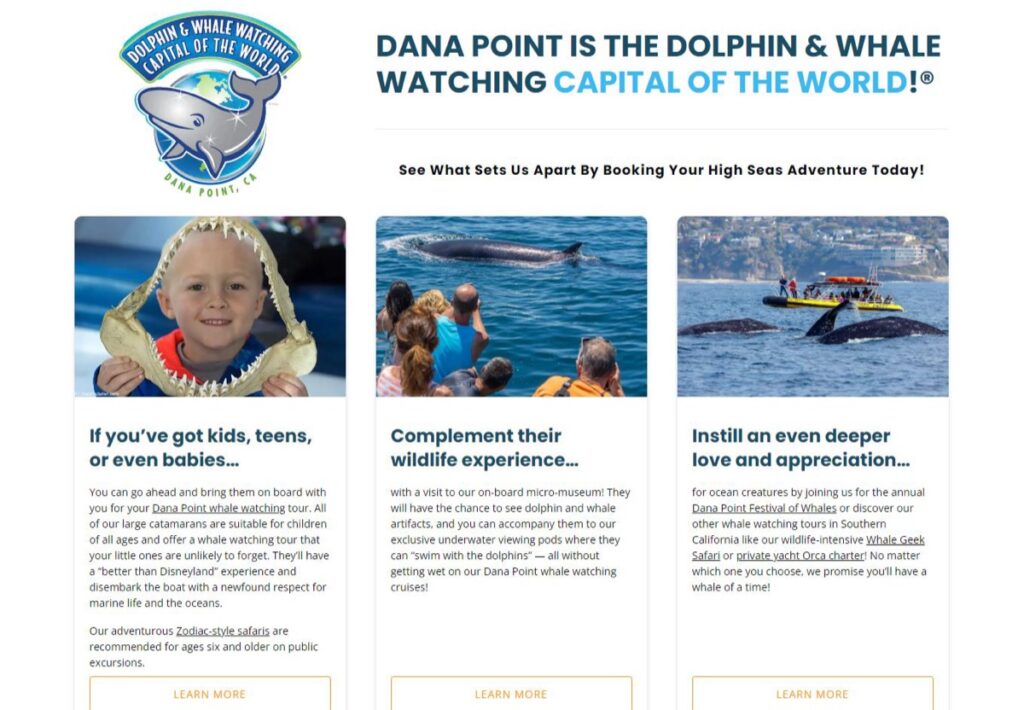
And, because we optimized the copy so effectively, Captain Dave’s Dana Point Dolphin & Whale Watching Safari is the first result in Google’s prestigious Businesses section when searching for “Dana Point whale watching.” That’s huge! Simply put, SEO for tourism works.
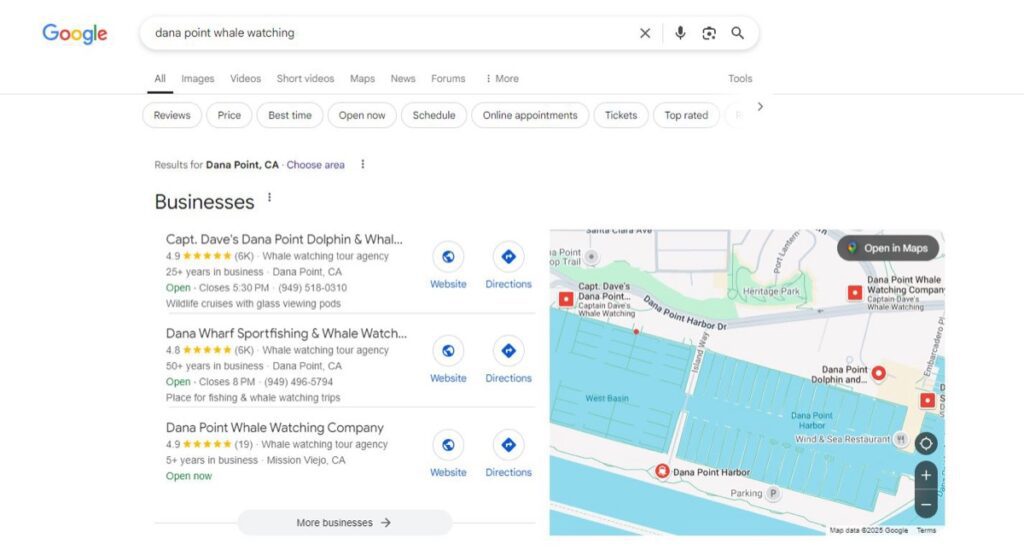
Chart Your Course With Five-Star SEO Pros
Navigating SEO for travel websites can be challenging on your own. There’s a reason why we’re the go-to SEO destination among in-the-know businesses: We’re the best at it! Don’t take our word for it. Check our case studies to see our first-class work in action, and browse our reviews to get an idea of how our clients feel about their investments.
Count on our team of skilled experts to be your co-pilots throughout every stage of your digital marketing journey. We’re eager and able to provide and implement a roadmap to success. Let’s talk. Contact us for a free consultation.