The Rundown
- In 2026, web design trends split between visual differentiation and AI-driven functionality, both directly impacting conversion and engagement.
- Human-crafted design elements, organic shapes, asymmetry, texture, and custom illustration, are used to create warmth and trust in an AI-saturated environment.
- Spatial UX introduces 3D depth, layered motion, and responsive micro-interactions, making websites behave more like environments than flat pages.
- Micro-animations function as usability infrastructure, confirming actions and reducing friction rather than adding decoration.
- Bold visual systems replace muted minimalism, using saturated color, expressive typography, and repeatable signature UI patterns to strengthen brand recall.
- The TL;DR content model and AI-first information architecture use structured summaries, direct answers, and FAQs to improve scannability and AI citation accuracy.
- AI-driven trends in 2026 shift websites from static pages to agentic systems that execute tasks like cart building and support workflows.
- AI-accelerated workflows enable rapid layout generation, testing, and accessibility auditing within defined design systems.
- Performance-first design, including sub-2.5 second load times and responsive interaction, remains a baseline requirement for competitive UX in 2026 website trends.
Table of Contents
- 1 The Most Important Web Design Trends in 2026
- 2 Frequently Asked Questions
- 3 How AI Is Reshaping Web Design
- 4 Turn 2026 Web Design Trends Into Revenue With Coalition Technologies
- 5 Sources
The Most Important Web Design Trends in 2026
More Human, More Handmade
As more digital products start to look and behave the same, visual design is moving back toward warmth, character, and intentional imperfection.
Many 2026 interfaces are embracing:
- Organic shapes and flowing section dividers
- Asymmetrical layouts that feel composed rather than templated
- Hand-drawn icons, custom cursors, and illustrated accents
- Film grain, subtle texture overlays, and tactile surfaces
- Retro typography references and vintage-inspired color palettes (more on that later!)
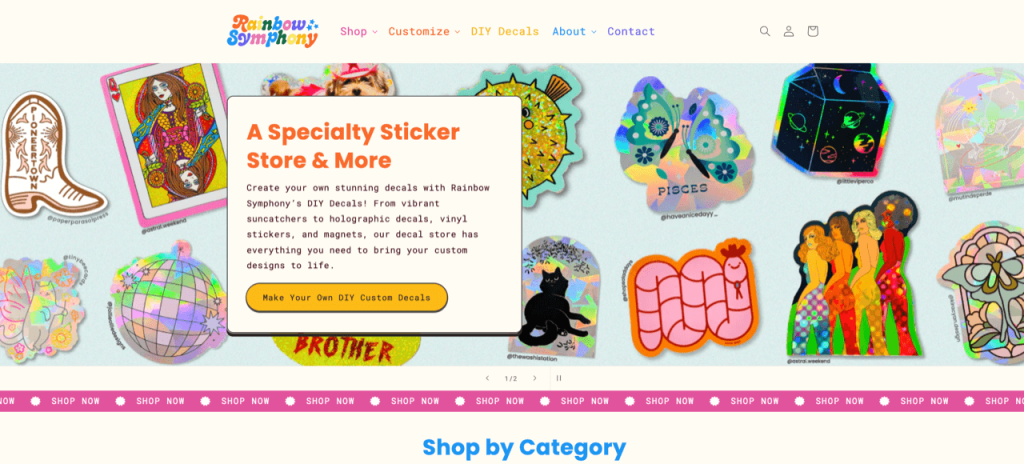
The goal is to create a site that feels unmistakably crafted. When AI tools make it easier than ever to generate layouts, human touches that come from restraint, art direction, and personality are celebrated.
In practical terms, this means:
- Commissioning custom illustrations instead of relying on stock libraries
- Introducing subtle texture or motion to break sterile flatness
- Using distinctive section transitions instead of predictable blocks
- Designing reusable but expressive UI patterns unique to one’s brand
In an AI-heavy ecosystem, visual craft becomes a trust signal. People instinctively recognize when something feels designed versus generated.
More Immersive Interaction (3D + Spatial Depth)
Web design trends in 2026 are gaining dimensionality.
Web experiences are moving beyond flat pages and into interactive depth. 3D elements are becoming easier to build and use, and they can respond as people scroll, move a cursor, or tilt a device.
Some examples to incorporate:
- 3D product previews that rotate and respond to scroll
- Depth-based layering where elements move at different speeds
- Micro-interactions tied to cursor movement or device tilt
- Interactive storytelling sections that feel spatial, not flat
Websites are more and more behaving like environments rather than pages. Beyond visuals, interaction is expanding across more senses, too:
- Subtle motion cues for confirmation and feedback
- Audio accents for specific interactions
- Gesture or voice-triggered inputs in certain use cases
The shift is toward spatial UX, where buttons behave like objects, cards feel stackable, and components respond with weight and intention.
Micro-Animations (Micro-Interactions That Clarify, Not Distract)
Micro-animations are becoming a usability layer in 2026’s web design trends. The emphasis is now on small transitions that confirm actions, highlight what’s interactive, and reduce uncertainty, especially in more complex, AI-influenced interfaces.
Think hover states, button feedback, subtle scroll triggers, and gentle state changes that help users feel oriented.
Sound as UI Feedback
A smaller but growing trend is adding quiet sound design to specific interactions, like confirmations, transitions, and moments where feedback improves confidence.
It’s most effective when it’s subtle, optional (easy mute), and tied to accessibility preferences, so it enhances the experience without becoming noise.
Bolder Visual Identity (Maximalist Color + Signature Systems)
The ultra-minimal, muted color aesthetic that dominated the early 2020s is losing ground.
In 2026, many web design trends are reclaiming visual boldness:
- Expanded, saturated color systems
- High-contrast combinations
- Expressive typography with movement and scale shifts
- Oversized headlines used as visual anchors
- Animated type that participates in storytelling
Color is now more strategic than purely functional.
Brands are also developing signature systems, meaning a small set of distinctive visual rules repeated consistently across the site:
- A unique button shape or corner radius
- A recognizable animation pattern
- A proprietary grid rhythm
- A distinct highlight treatment for statistics or quotes
These repeatable patterns create brand memory. In a world where AI summaries flatten presentation, strong visual systems ensure that when someone clicks through, they immediately know where they are.
Kinetic Typography
Typography in 2026 is doing more than sitting on the page. Brands are using motion and dynamic treatments to guide attention, signal hierarchy, and make key messages feel intentional.
This includes kinetic hero headlines, animated emphasis on key phrases, and variable font behaviors that respond to interaction or context.
The TL;DR Experience
The TL;DR pattern is trending because it mirrors how users consume information now. People scan first, then choose where to go deeper. Sites now provide a structured overview of key takeaways that gives the essentials upfront, then lets users explore selectively.
This is especially useful for being cited by LLMs, as well.
While color is becoming more maximalist in 2026 website trends, content is becoming strategically more concise.
More Personalized Experiences
Instead of forcing everyone through the same set path, interfaces are adapting to a person’s goal at that moment. That can mean different layouts, content, or recommendations depending on context and signals, so two visitors might not see the same experience.
Some experiences also shift tone based on the situation, such as quieter “focus” modes or softer “evening” modes that adjust color, motion, and text for greater comfort and readability.
Ready to apply these 2026 web design trends instead of just reading about them?
Frequently Asked Questions
How is AI changing web design in 2026?
In web design, AI does tasks like automating repetitive coding and providing smart design suggestions, allowing for faster and predictive user experiences that anticipate problems before they occur.
What’s the most important 2026 website trend for ROI?
Agentic UX is one of the most important web design trends for 2026. By integrating AI agents that can “do” rather than “show,” businesses are seeing a massive impact on their bottom line. These agents handle complex workflows, like customer product configurations or real-time negotiations, directly within the interface.
How can I maintain brand identity in a “flat” AI world?
The 2026 web design trends show that personality is the biggest asset when it comes to this. Leading brands are increasingly formalizing brand voice guidelines for AI systems to ensure every automated interaction carries their unique wit and tone.
Does traditional SEO still matter?
Yes, but it has shifted toward AI SEO. As AI search continues to fragment traditional rankings, organic CTR can drop by over 61% when an AI Overview is present1. Therefore, while traditional SEO is still important, it should be done in addition to designing the site for “machine experience.”
How AI Is Reshaping Web Design
In 2026, web design trends keep moving towards agentic functionality, where websites act as autonomous partners, not the static online brochures they’ve been for a long time.
By the end of the year, it is predicted that over 40% of enterprise applications will have embedded AI agents into their operations2, meaning that a site can’t just show information if it needs to remain relevant.
Because of agentic functionality, most website trends in 2026 are focused on integrating AI in web design as companies figure out how to increase their engagement, leads, and sales with the help of AI.
Agentic Websites
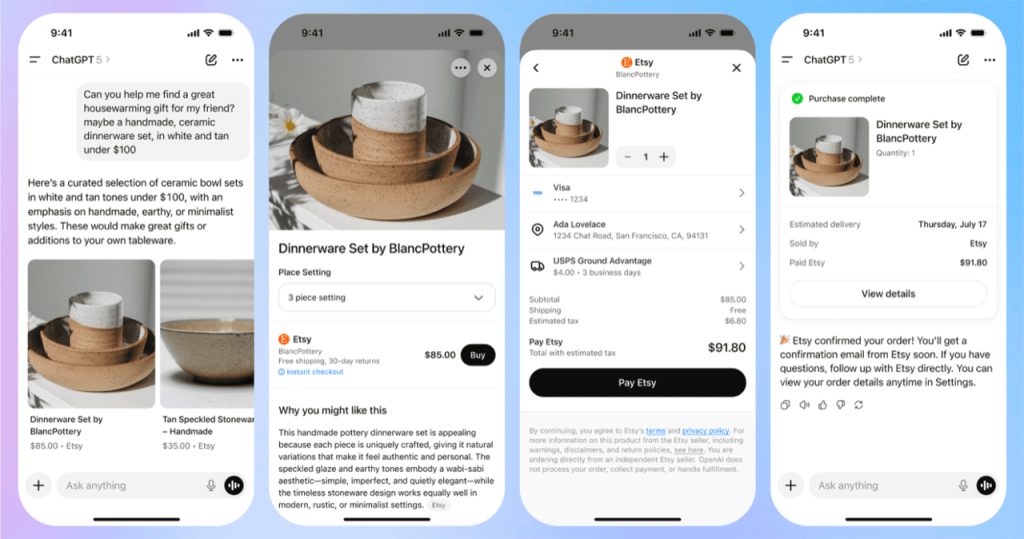
With over 45% of consumers using AI to shop, there is a shift towards replacing manual forms with agentic action zones3.
In this trend, AI can process natural language requests, like “find me a gift under $50 for a runner.” The AI agent not only finds the gift but also builds the cart for the customer instantly.
Rather than static information hubs that display buttons, these websites now act as autonomous partners capable of independent reasoning and task execution.
Here’s how to set it up:
- Replace static forms with a persistent natural-language “Ask & Act” input on key pages.
- Pair conversational input with visible, reversible actions, like previews, confirmations, and undo states.
- Limit early agent capabilities to high-impact tasks, such as cart building, bundling, and reorders.
- Design agent interactions to execute actions in-page instead of redirecting users through funnels.
- Track agent-initiated actions as core conversion events, including cart adds, AOV, and time to checkout.
AI-First Information Architecture
Search behavior is shifting from fragmented keywords to conversational prompts, such as:
- “What is the best CRM for small law firms under $100 per month?”
- “How long does SEO take for a new ecommerce site?”
Brands are prioritizing natural-language FAQs and direct-answer sections higher in the page hierarchy.
Hyper-Personalized Web Journeys
Web design trends in 2026 are focusing less on invisible tracking. The focus now is on progressive profiling, such as using interactive quizzes or preference centers, where users intentionally share their needs.
Studies show that 83% of consumers are willing to share personal data only if it leads to a truly tailored experience4, such as the one you get with progressive profiling.
Coalition recommends designing value exchanges, like offering a personalized discount or guide in return for a single preference signal. This makes personalization feel like a service, not surveillance.
Brand Differentiation in Flat AI Interfaces
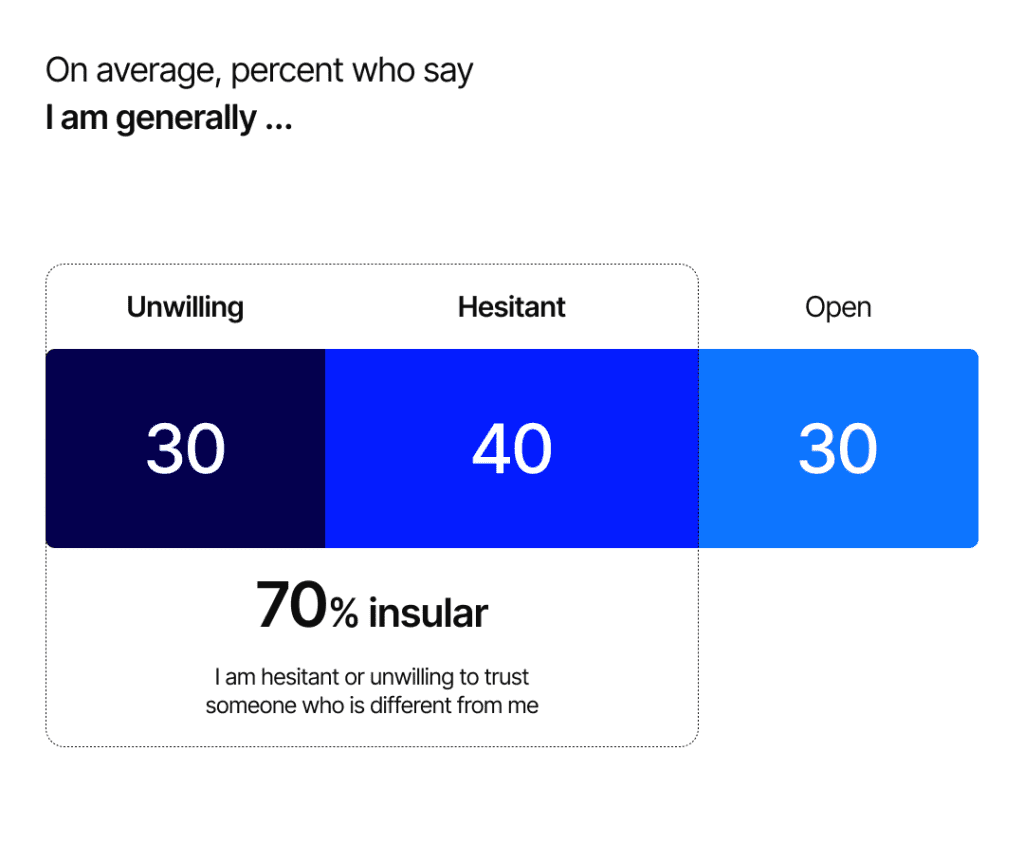
There are no visual brand elements, like logos and custom layouts, when users chat with LLMs, so the web design trends in 2026 are increasingly prioritizing that factor of differentiation. How do brands stand out when every answer is delivered through the same chat window?
About 70% of global consumers hold an insular mindset, meaning that they are hesitant to trust information that lacks a clear, familiar brand voice or one that aligns with their beliefs5.
For AI in your web design to actually be worth your time, you must make sure that your tone, clarity, and uniqueness are also not lost as you cater to data structures that AI can interpret. You have to figure out how to maintain trust and apply that across all your site content as you structure it for AI models.
A practical way to do this is to build a small set of branded UI patterns, like statistical callouts, expert quote cards, and author/brand panels with your logo, colors, and typography.
Then, reuse them on pages most likely to be cited by AI. (Check “share of model” or referral traffic from ChatGPT for this).
On those pages, make sure to break up the text with high-identity UI patterns. That way, whenever someone clicks through a flat AI answer, the page they land on immediately feels branded, not just more generic text.
AI-Accelerated Production Workflows
Perhaps the most notable trend of AI in web design is how it’s being used for rapid iterations, allowing teams to generate complex layouts, code snippets, theme variations, and even accessibility audits in seconds.
93% of web designers now use AI tools, with 51% of them using these tools to specifically create complete web page designs from scratch6. Professionals using AI are set to reclaim an average of 12 hours per week by 20297, which is time they can dedicate to other tasks.
Therefore, following the web design trends in 2026 means that instead of designing every variant of page by hand, define the brand’s core design tokens and let AI generate the variations for A/B testing.
Coalition Technologies has found that this constraint-setting approach allows brands to test up to 42% more content monthly without increasing overhead, ensuring that the final design is backed by data, not just intuition.
Turn 2026 Web Design Trends Into Revenue With Coalition Technologies
If these website trends of 2026 feel exciting but hard to execute alongside everything on your plate, that’s where our team steps in. Coalition Technologies offers several digital marketing services, including translating AI in web development and web design from theory into cleaner UX, faster sites, and pages that are optimized for 2026’s conversion best practices.
Stop guessing at trends. Let us lay out the plan and handle the technical side. When you’re ready for a redesign that actually supports your marketing, talk with Coalition Technologies.