



The Rundown
- AI-driven search has changed how B2B brands get discovered. The pages that rise now are built for structure, proof, and clarity, not guesswork.
- Comparison pages, API docs, and use-case hubs help models quote your data instead of your competitors.
- When content is verifiable, linked, and easy to parse, it becomes the source behind AI summaries rather than the one left out.
- Off-site thought leadership and product documentation, along with schema, further strengthen those signals, proving brand authority where algorithms look first.
- At Coalition Technologies, we build these frameworks every day, combining technical SEO, clean data, and creative insight so your expertise earns visibility.
In 2025, 30% of searches and nearly three-quarters of problem-solving queries produced an AI-generated overview at the top of the page.1 This means that brands that built pages for traditional SEO lost ground when models began summarizing instead of linking.
We’ve spent the past year refining our AI-driven content strategy based on 5 B2B content types AI search engines love. To achieve this, we’ve blended structured data with human insight, ensuring that our clients’ messaging remains relevant as AI-powered SERP visibility becomes increasingly important.
AI search engine ranking factors now value verifiable claims, clean markup, and topical authority more than ever. When done right, these formats not only survive AI summaries but also power those summaries. Here are the five formats that drive results for us and our clients, along with what you can do with each.
Table of Contents
Head-to-Head Comparison Pages
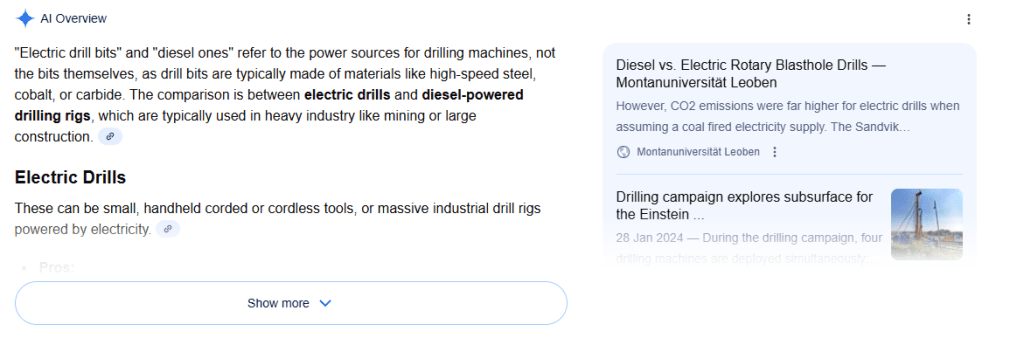
These pages dominate intent-driven searches, such as “Tool A vs Tool B,” which is what makes them one of the most useful B2B content types among the five that search engines love. Content in this format will resolve a buyer’s job quickly, and since it is consistent, the AI model can parse and summarize it without confusion.
This is why we also design pages to mirror this clarity. Each one includes:
- A data table outlining product specs, contract models, and SLAs.
- Short context paragraphs explaining trade-offs in human terms.
- Schema for “Product” and “ComparisonReview” types validated through Google’s Rich Results Test.
- Anchored internal links back to our SEO service and content marketing pages.
The takeaway: consistency beats creativity here. Buyers and AI both reward precision over prose in this AI-driven content strategy. Among the 5 B2B content types that search engines love, this is the easiest starting point.
Integration Docs and Open API Pages
AI systems crawl developer documentation because it’s structured, factual, and machine-readable, which are the key factors that drive AI search engine ranking and influence AI-powered SERP visibility. An endpoint list or authentication guide may outrank your marketing copy simply because it answers questions in code blocks.
For brands offering software or services, API docs are not just technical material. They are marketing assets. For our software and services clients, we write integration pages that include:
- JSON examples and requests or response samples.
- Error codes, rate-limits, and SDK links.
- Short “works with” lists naming partner platforms.
- Schema types like SoftwareApplication and HowTo.
Clean code documentation is one of the 5 B2B content types AI search engines love because it meets both human and algorithmic standards of clarity. If your site lacks this layer, start with an “Integrations” hub. It builds trust with engineers and provides crawlers with the factual backbone they need.
Use-Case Hubs and Job-to-Be-Done Pages
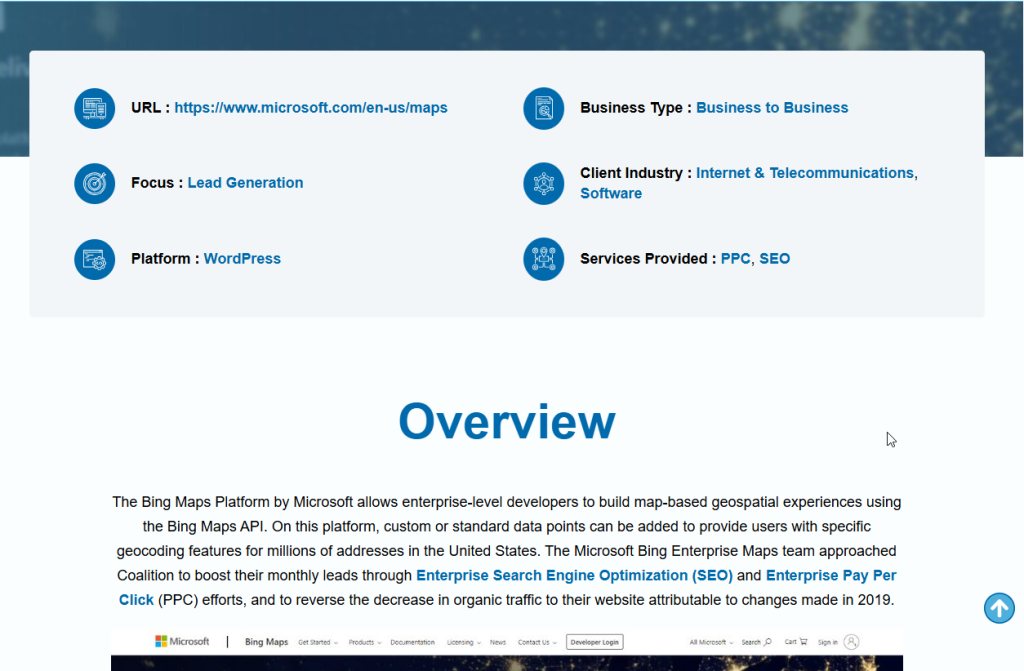
Traditional blogs organize content by category; AI systems organize it by intent. A hub built around outcomes like “How finance teams automate reporting” and “Solutions for B2B distributors” maps directly to that logic, which is why we’ve added it among the five B2B content types AI search engines love.
Here, our AI-driven content strategy is to structure each hub around the buyer’s role and the problem they face. That means:
- Overview page summarizing industries and use cases.
- Sub-pages for each outcome (save time, reduce cost, increase accuracy).
- Embedded client stories or testimonials with metrics: “42% faster onboarding after automation.”
To start with, ensure your use-case pages include features such as testimonials and product mapping.
Get your brand seen in AI results.
Frequently Asked Questions
What makes a content format one of the top 5 B2B content types AI search engines love?
It’s any format that organizes verifiable facts in a way models can quote and users can trust. Pages with clean data, headings, context, and so on are the most reusable across AI summaries.
How can I use an AI-driven content strategy without sounding robotic?
Always write for people first and systems second. If the message is valid and supported by evidence, the algorithms will follow.
Why is AI-powered SERP visibility so crucial for B2B brands?
Because buyers now discover vendors through AI summaries before clicking. Being cited there builds recognition before a prospect ever visits your site.
Off-Site Thought Leadership
Among the 5 B2B content types AI search engines love, the most overlooked but high-impact formats in our portfolio are the guest essay, research piece, or founder op-ed on trusted platforms. Here is why.
AI-powered answer engines frequently cite third-party sources as authority signals. A study shows that brand mentions show the strongest correlation of 0.664 with AI Overview visibility.2
Here is how we use that in our strategies and for our clients:
- We identify authoritative external venues in the client’s niche, such as industry journals and media outlets.
- We craft a unique thought-leadership article with fresh data (not a rehash) and publish with the author’s byline.
- We sometimes republish a version on our site (with the canonical set to the original) and link back to the original.
- We track mentions of the brand and topic across the web and monitor how often AI leaders cite the content.
By doing so, we transform off-site content into one of the five dominant B2B content types that AI search engines love, as we enhance both brand pedigree and machine-readable citation signals.
Product Docs with Clean Schema
Last but not least in our AI-driven content strategy are product documentation pages, including help guides, API references, FAQs with structured data, and more. Of all the AI search ranking factors, search machine readability is the strength here.
Product and developer docs with a valid schema surface more reliably in AI answers. A recent study found that the only page to make it into an AI Overview was the version with a well-implemented schema.3 This is therefore a very important AI-powered SERP visibility factor to consider when thinking about the 5 B2B content types AI search engines love.
Here is our approach:
- We craft documentation with headings like “Getting Started,” “API Endpoints”, “Error Codes”, and “Examples”.
- We embed JSON-LD schema (e.g., SoftwareApplication, HowTo, FAQPage), ensuring the code matches visible content.
- We apply internal linking from marketing pages into documentation hubs, creating a content graph that’s easily crawlable.
- We validate the schema using Google’s Rich Results Tester and monitor for changes after release.
This format shrinks the gap between machine reasoning and human queries; hence, it ranks as one of the five essential B2B content types AI search engines love.
Work With Us
The work we do at Coalition Technologies has helped thousands of businesses improve their AI-driven content strategy, and it has made us one of the best ecommerce GEO/AI SEO agencies in the world.
Our team of experts combines traditional SEO strategies with current trends, such as B2B content types, to give our clients an edge over the competition. The work we do translates into real leads that drive revenue growth for their businesses, without requiring them to spend too much on paid advertising.
If you’re ready for SEO that keeps you ahead, not behind, contact us today to get started.