


Key Takeaways
- Wix is an all-in-one website builder with a user-friendly drag-and-drop editor.
- BigCommerce is a robust, dedicated ecommerce platform.
- Wix is ideal for individuals and small businesses seeking an easy solution for building professional websites.
- BigCommerce is an excellent platform for building an enterprise-grade website that can scale long-term.
- Wix offers over 2,000 templates and themes for various build types, whereas BigCommerce provides hundreds of templates and themes with a stronger focus on ecommerce.
- Wix offers over 500 user-friendly apps and extensions, while BigCommerce provides more than 1,200 apps and extensions, many of which feature deep functionality and a strong focus on ecommerce.
- Comparing Wix vs BigCommerce for SEO, both platforms have integrated SEO tools. BigCommerce is typically better suited for deep, technical SEO, but its blog capabilities are surface-level with no native RSS.
- Both platforms include robust security measures. BigCommerce’s enterprise-grade security is suitable for large businesses; Wix users may need to seek third-party security as the business scales.
- Wix has a free plan and is generally more affordable; BigCommerce costs more overall, but includes deeper features for large-scale builds.
- Overall, Wix is a user-friendly tool that can build professional websites for small to mid-sized businesses. BigCommerce is a powerful solution for mid-sized to enterprise businesses.
Let the battle of Wix vs BigCommerce begin! Both platforms can serve as the foundation for ecommerce website building and management, but they cater to very different end users. One isn’t necessarily superior; context is key.
For new ecommerce businesses, choosing a CMS (content management system) is a crucial rite of passage that sets the stage for the future. For established sellers, transitioning from an independent website to a purpose-designed CMS can be an essential step forward that facilitates scaling.
By 2027, experts predict that 23% of retail purchases will happen online, and the overall ecommerce market will total over $7.9 trillion.1 If you haven’t picked your platform yet, now is the time.
You can always count on your know-it-all pals here at Coalition to keep you informed. Join us as we weigh the pros and cons of Wix vs BigCommerce, including UX (user experience), templates and themes, apps and integrations, SEO (search engine optimization), security, and pricing.
Table of Contents
Fast Facts: Wix
- Wix is a great all-purpose website builder with some ecommerce features.
- A user-friendly drag-and-drop interface has made Wix super popular among individuals and small to mid-sized businesses, particularly those looking for an easy way to get up and running.
Fast Facts: BigCommerce
- BigCommerce is a robust, dedicated ecommerce platform.
Frequently Asked Questions
Is Wix a good selling platform?
Many businesses use Wix to sell online. It’s an easy way to get up and running. When comparing Wix vs BigCommerce and other bigger builders, Wix has been making strides in its scalability, but it may not be the best choice for enterprise-level builds.
Which is more popular, Wix or Shopify?
Shopify is slightly more popular than Wix, powering 4.7% of all websites, as of May 2025. However, Wix isn’t far behind at 3.8%.3
Who are the largest customers of BigCommerce?
Some household names that use BigCommerce include GE Appliances, The Smithsonian Institution, Old Spice, Oral-B, Crest, Harvard Law School, and our client, Spinning.
Does BigCommerce require coding?
BigCommerce doesn’t necessarily require coding, but it does have an extensive suite of options for developers who want to tweak the website.
Is BigCommerce beginner-friendly?
When comparing Wix vs BigCommerce, there’s no denying that Wix is the more user-friendly platform. However, BigCommerce does offer its own drag-and-drop editor that allows non-technical users to create and edit ecommerce websites.
Is BigCommerce good for a small business?
Yes, BigCommerce can be an outstanding platform for small to mid-sized businesses, especially those that need to be able to scale in the future. BigCommerce can accommodate companies of all sizes.
Is BigCommerce free?
No, BigCommerce doesn’t offer a free plan. Wix offers a free plan, but it may not be fully featured enough for professional websites, particularly those requiring long-term scalability. It’s worth investing in a plan that will cover your immediate needs and your future growth.
Does your ecommerce site need a boost? We’ll give you the competitive edge.
Wix vs BigCommerce: User Experience
UX (user experience) may not be a top priority if you’re hiring a web designer, but ease of use matters a lot to DIY builders who prefer a hands-on approach. In this category, Wix is the clear winner. However, that crown comes with limitations.
Wix’s drag-and-drop editor and guided interface facilitate a simple, straightforward building process. And after building the website, management and maintenance are equally easy.
If you put in the time to master Wix, you may end up loving the workflow you develop within its limited framework. A key difference between Wix and BigCommerce is that Wix emphasizes creative freedom, whereas BigCommerce focuses on professional polish.
It’s worth noting that BigCommerce does offer its own drag-and-drop editor called Page Builder. It has a steeper learning curve and is generally limited in scope as far as creative freedom, but the upside is that Page Builder is explicitly optimized for ecommerce.
Wix is a more accessible tool that can form the backbone of a great website. However, because it’s a proprietary, closed CMS, if you end up needing to rebuild your site down the line, your code and design can’t be migrated to a new platform. You’ll still have your own assets (images and text), but you’ll essentially be starting from scratch.
Wix vs BigCommerce: Templates and Themes
Both platforms offer a variety of different templates and themes that make it easy to create an impressive website without coding. This is another factor that may not matter if you’re outsourcing your site.
Wix offers over 2,000 free and paid templates that cater to specific industries and general use.
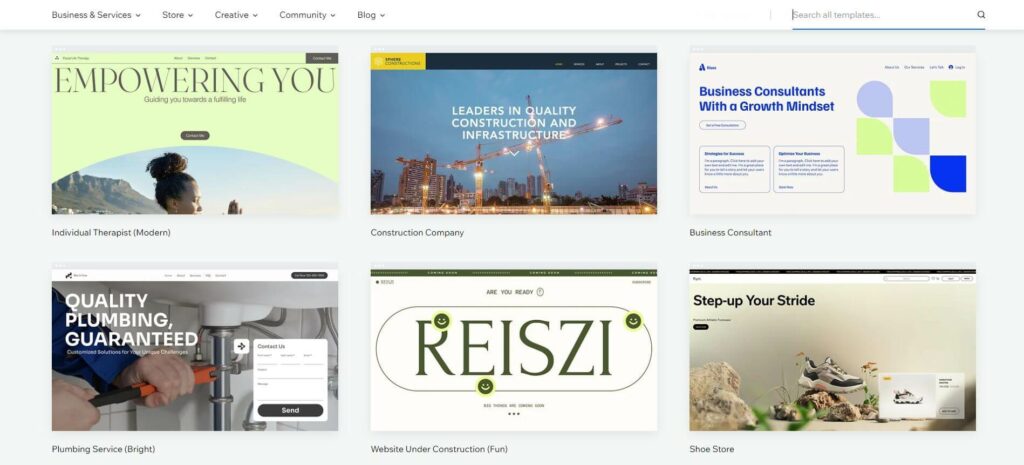
Combined with the drag-and-drop editor, building a website is as easy as choosing a template, plugging in your images and text, and tweaking the layout, if desired. Choose carefully, though. Once you select a template, you’re stuck with it. If you want to refresh your site’s design, you can use the editor to make limited adjustments, but a drastic overhaul will require a rebuild.
When comparing Wix vs BigCommerce templates and themes, you’ll find that BigCommerce offers fewer templates and themes (hundreds compared to thousands). But quality often supersedes quantity. BigCommerce’s paid and free themes are optimized explicitly for ecommerce conversions and overall performance.

And, BigCommerce lets you easily trade themes without jumping through hoops and over hurdles. BigCommerce also has more robust coding control and APIs (application programming interfaces), allowing devs to really fine-tune the website at a deeper level. If you require a complex, highly customizable build, we recommend BigCommerce.
Wix vs BigCommerce: Apps and Integrations
Apps, integrations, plugins, extensions, whatever you want to call them, they add functionality and features to the platform by integrating with third-party software and self-contained tools. Both platforms have their own app stores.
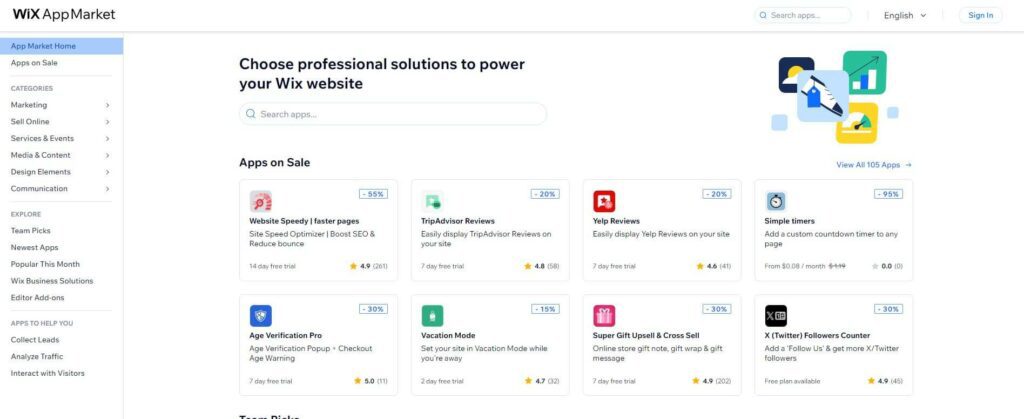
The Wix App Market has 500+ options.
BigCommerce offers 1,200+ options.

As you probably expect by now, Wix’s apps are generally more straightforward and user-friendly, and they cater to a wide range of uses. BigCommerce’s apps are more robust and cater specifically to ecommerce users.
Wix vs BigCommerce: SEO
Ecommerce SEO is more critical than ever. After all, that fancy website won’t do much good if nobody sees it!
Wix has made progress with its SEO capabilities, mainly with its SEO Checklist, but it’s not quite as full-featured as BigCommerce. The platform will assist you with basic optimization tasks, such as creating titles and metadata, and selecting keywords, but it may not accommodate more advanced SEO techniques.
Although both platforms include integrated SEO tools, the difference between Wix and BigCommerce becomes more evident when an SEO specialist needs to delve into the technical aspects of SEO, with BigCommerce offering deeper control and more robust options.
Beyond facilitating advanced SEO customization, BigCommerce sites have an average page load speed of 2.4 seconds. This excellent performance is obviously appealing to human users, and search engine crawlers, AI agents, and bots take page speed into account as well.
It’s worth noting that while BigCommerce is a fantastic platform for SEO overall, its blog capabilities are fundamental with no native RSS.
Remember: a platform’s SEO potential is only as good as the SEO specialist using it. You’re better off hiring a top-tier SEO agency to optimize a Wix site than trying to optimize a BigCommerce site on your own. A custom-tailored approach is the key to maximizing the potential of any CMS.
Wix vs BigCommerce: Security
Both platforms include standard security measures like HTTPS encryption, SSL certificates, Distributed Denial of Service (DDoS) protection, and Payment Card Industry Data Security Standard (PCI DSS) compliance.
Wix’s security may not be robust enough for large ecommerce businesses that require enterprise-level features like automatic backups, automatic sign-outs, headless security (back-end and front-end separation), and partnerships with cybersecurity firms that provide proactive threat intelligence.
BigCommerce is capable of scaling when you need large-scale security measures in place. Wix’s security is usually adequate for small to mid-sized businesses, but you may need to add third-party security when your business expands.
Wix vs BigCommerce: Pricing
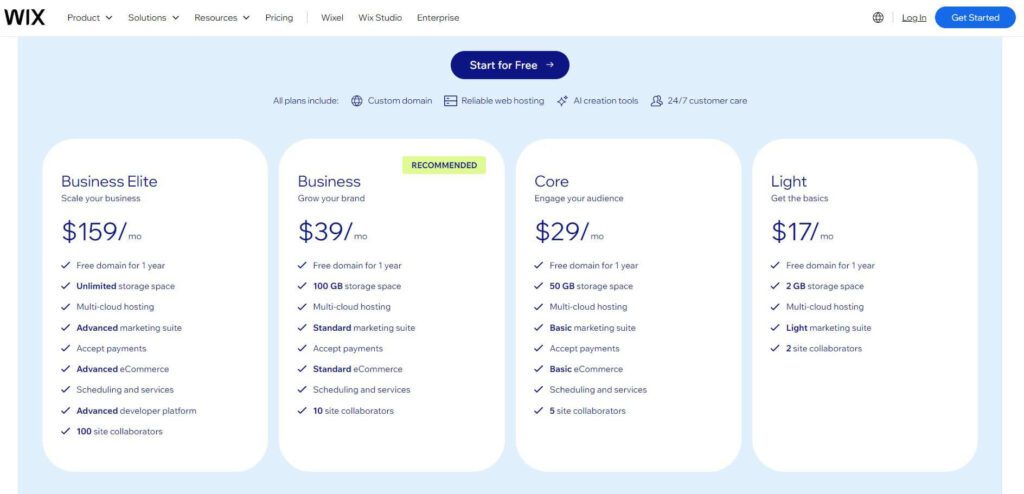
Wix has a free plan and is generally more affordable.
BigCommerce costs more, but typically provides more value.
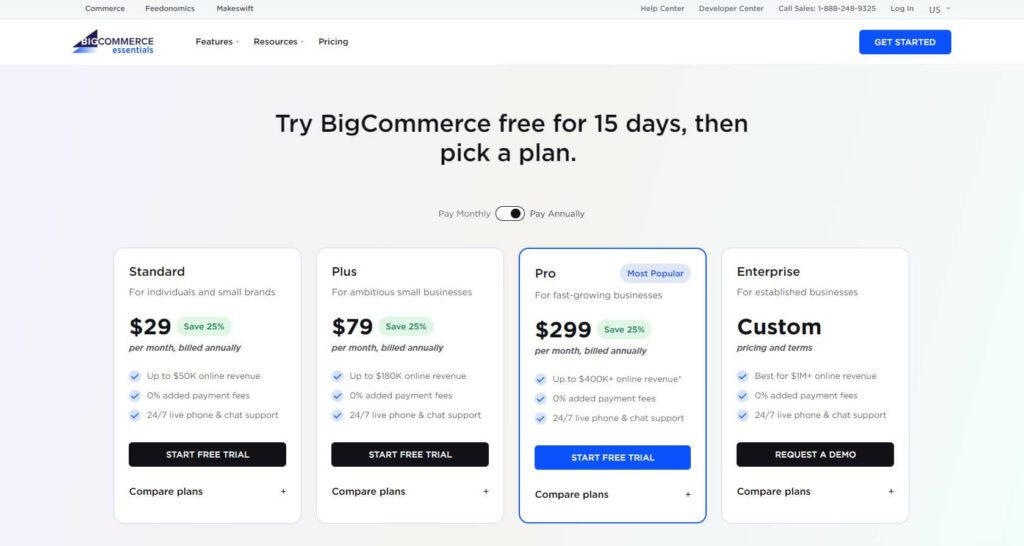
Some Wix plans and payment gateways include transaction fees that can add up quickly as your business grows. BigCommerce doesn’t have any platform fees, but it does limit your sales revenue per plan, and users can experience unexpected billing increases when scaling rapidly.
We’ll Help You Choose the Right Platform
Ultimately, we generally recommend Wix for small to mid-sized businesses and BigCommerce for mid-sized to enterprise businesses. Still, as is always the case, the best solution depends on the client.
If you still need help choosing between Wix vs BigCommerce, get in touch for personalized guidance. However you decide to proceed, we’ll make sure your ecommerce business thrives. Get started now.
Resources:
1. https://www.forbes.com/advisor/business/ecommerce-statistics/
2. https://www.wix.com/blog/small-business-website-statistics
3. https://www.searchenginejournal.com/cms-market-share/454039/