The Rundown
- Tools like ChatGPT, Perplexity, and Gemini are shaping brand discovery, making AI search the next frontier in search marketing.
- AI referral traffic consists of site visits that originate from LLM platforms when users click cited or linked results.
- Some data suggests that visitors referred from AI tools convert at higher rates than visitors from traditional search.
- Google Analytics 4 can identify AI referral visits by filtering acquisition reporting for known LLM referrer domains in session source/medium.
- Google Analytics 4 custom channel groups can categorize AI referrals into a dedicated “AI Traffic” channel using referrer rules and regex matching.
- UTM parameters can be used to improve traceability for links distributed in environments that LLMs may surface to users.
- SEO tools can supplement analytics by surfacing citations, mentions, and backlinks associated with AI-driven visibility.
- Bounce rate, session duration, and conversion rate indicate whether AI referrals are generating qualified traffic and leads.
- Content optimized for LLM-driven discovery uses clear structure, direct answers, and strong topical alignment.
- Schema markup and FAQ-rich content structures make pages easier for LLMs to interpret, reference, and cite.
Right now, some of the most valuable referral traffic to your website is coming via AI-powered search platforms like ChatGPT, Perplexity, Gemini, and other Large Language Models (LLMs).
Why? As an example, nearly half of ChatGPT prompts (49%)1 are “asking” queries. “Where can I …?”, “How do I …?” “What’s the best…” That means users are treating AI tools as trusted advisors. They’re searching with intent to act. They’re further along in their decision-making process. And as a result, they arrive qualified.

Table of Contents
Fewer But Better Visits
Early numbers confirm this. In one study, Ahrefs found that traffic coming via AI-powered search converted 23 times2 more than traditional organic search traffic.
These visitors may be fewer, yes, but they’re far more likely to make a purchase, subscribe, or sign up. That’s also consistent with what Adobe reported during Cyber Week 20253, when AI-driven traffic to U.S. retail sites increased by 670% year over year, and season-to-date AI traffic was up 760%.
This is why it’s important to track, measure, and increase traffic from AI search.
Frequently Asked Questions
What is AI referral traffic?
It refers to visitors who reach your website after interacting with AI-driven tools like ChatGPT, Perplexity, Gemini, or other large language models (LLMs) that reference or recommend your brand.
Why does AI traffic convert better than regular search traffic?
Users coming from AI assistants or chat tools are typically seeking specific solutions or recommendations, not just browsing. That means they’re already closer to making a decision.
How does tracking AI traffic benefit my brands?
Understanding how much visibility your brand gets across LLM platforms and where those high-intent visitors are coming from is crucial for your future SEO strategy.
How do I increase referral traffic from AI tools?
Optimize your content for conversational queries, add structured data (schema markup), and include clear, direct answers to common questions AI tools reference.
What types of businesses benefit most from AI-driven traffic?
Any business that provides specific, solution-based products or services, like SaaS tools, ecommerce businesses, and professional services. AI users typically ask precise questions, so brands with direct offerings and niche authority see the biggest returns.
What Are LLMs and How Do They Work?
Before we go into how to increase referral traffic from AI tools, let’s first look at how they work.
Traditional search engines rely on keyword matching, ranking algorithms, backlinks, etc., to generate a list of possible matches. LLMs operate differently by synthesizing content, generating summaries, and referencing sources.
For example, when a user types something like “Where can I find sustainable coffee brands?” The LLM interprets the intent, formulates a response, and often cites external sources or provides links. Users who click on these links become part of your brand’s AI referral traffic.
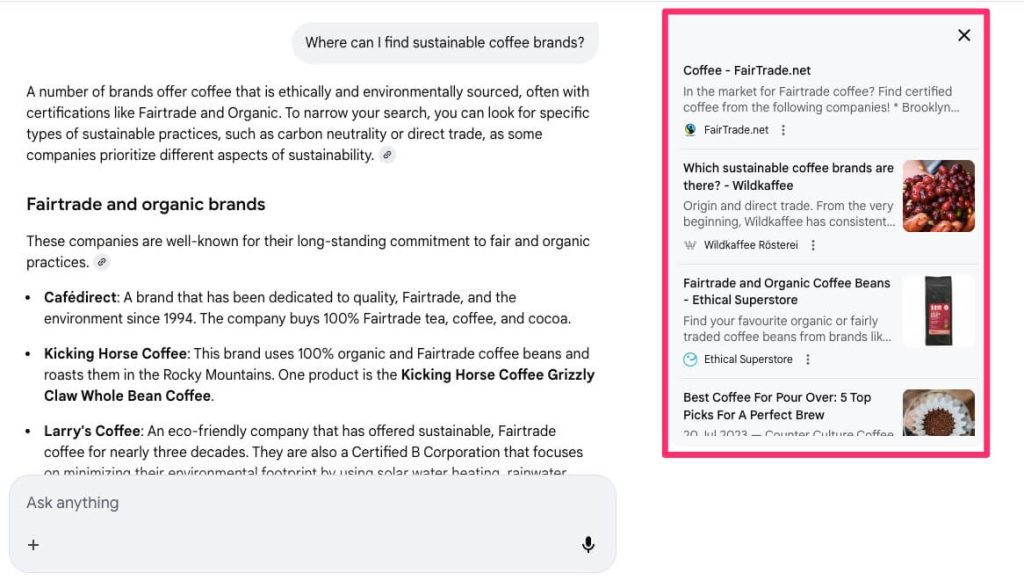
How LLMs Influence Search Behavior
These conversational and quick responses are changing the content discovery path for people on the web. Instead of typing keywords into a search engine, they may start with a chat prompt, get an answer, and then click on the links provided for more details.
And remember, these click-throughs often carry higher intent because the user is already exploring a solution.
How to Track AI Traffic
LLMs are evolving fast, but tracking AI referral traffic isn’t as mysterious as it sounds. There are a few practical ways to monitor AI search activity.
1. Check Your Traffic Acquisition Report
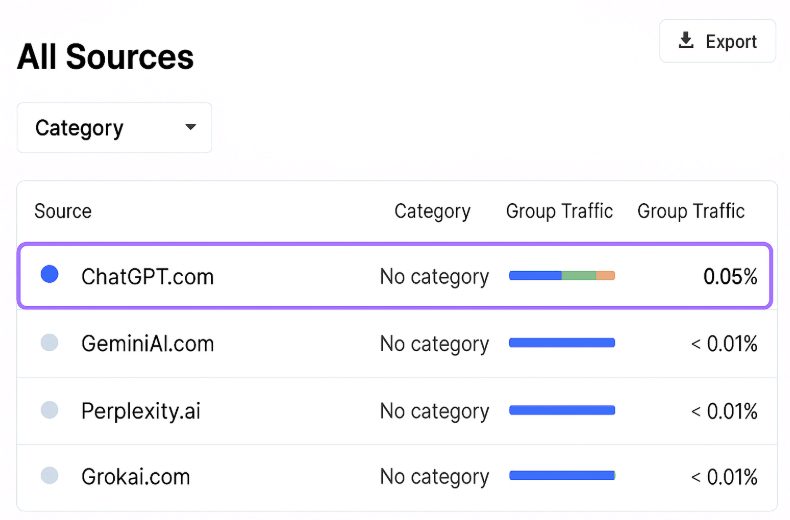
This is a manual way to do a quick check.
If you’re using GA4 (Google Analytics 4), go to:
- Reports → Acquisition → Traffic Acquisition → Session source/medium
- Here, look for domains like “chatgpt.com”, “chat.openai.com”, “perplexity.ai”, or “claude.ai”. Or use the search bar to filter for LLM names like “ChatGPT”, “Gemini”, “Copilot”, etc.
We suggest saving a filtered version of this report as your baseline, which brings us to the next method…
2. Build a Custom AI Channel Group
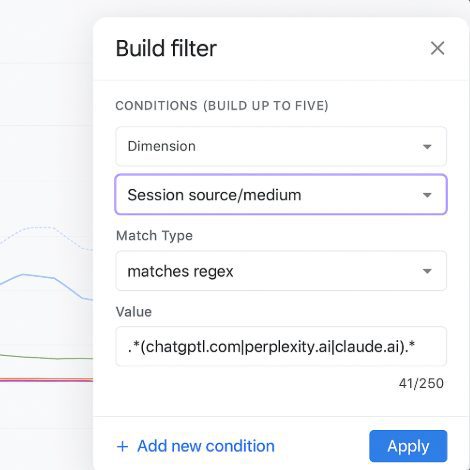
Once you start identifying consistent AI referral traffic, it’s better to create a dedicated channel group for them in GA4.
- Navigate to Admin: Go to Admin → Data Display → Channel Groups.
- Duplicate the Default: Click the three dots (menu) next to the “Default Channel Group” and select “Copy to create new,” or click “Create new channel group” to start with a copy of the default.
- Create the Channel: Click “Add new channel” and name it “AI Traffic” or whatever you prefer.
- Set the “Match Type” to “matches regex” and enter the following condition to define your new custom channel:
^(chat[.]openai[.]com|chatgpt[.]com|gemini[.]google[.]com|perplexity[.]ai|copilot[.]microsoft[.]com)$ - Save the new channel group.
Make sure to drag your “AI Traffic” channel above the default “Referral” channel so GA4 prioritizes it correctly.
This lets you see AI-driven sessions as a separate traffic category in your acquisition reports. Better yet, the custom channel group will apply to your historical data as well, so you can start analyzing your AI referral traffic data immediately.
One important caveat is that AI-enabled browsers, like ChatGPT Atlas and Perplexity’s Comet, can make attribution less consistent4. For example, some AI browser experiences may not reliably pass referrer data, which can cause a portion of AI-driven visits to show up as Direct or (not set) in GA4, even when the session originated from an LLM experience.
3. Use UTM Parameters When Sharing Links
If you’re publishing content that’s likely to be referenced by LLMs (for example, Reddit or Substack discussions that feed AI training data), attach UTM parameters to your URLs.
This is key when exploring how to increase referral traffic because it will help you identify whether the clicks coming from AI chat interfaces originated from those posts or shared links.
4. Monitor Mentions and Backlinks Through SEO Tools
Tools like Ahrefs, SEMrush, and Similarweb can detect early signals of AI-driven exposure like backlinks or citations from AI tools or aggregators.
They won’t replace your AI referral traffic analytics data, but they’ll help confirm that your AI SEO is working and your content is appearing in LLM-generated results.
Want real SEO and AI SEO results without the shady tactics?
Measuring the Effectiveness of LLM Referral Traffic
Knowing how to track AI traffic is one thing, but what use is it if it leads to nothing?
Here, you should start with the basics. I.e., KPIs that apply to any other channel, like engagement.
These include:
- Bounce rate: Are your visitors from AI platforms leaving immediately or exploring? A lower bounce rate suggests your website is relevant to their query and provides the solution they were looking for.
- Session duration: AI referral traffic is often people who have already done their research. If the amount of time users are spending on your website is higher than your organic average session duration, that’s confirmation that you’re attracting high-intent visitors.
- Pages per session: Users referred through AI platforms tend to dig deeper. More pages per visit can mean they’re evaluating options or comparing features. Both of these show commercial intent.
Assessing Conversions and Lead Quality
Engagement is a start, but conversions tell the full story. In GA4, conversions are now labeled as key events, but they function the same way for tracking goals.
Segment your reports to isolate the conversion rate, goal completions, or revenue per session from your custom AI referral traffic channel group.
- Are they completing valuable actions like subscribing or buying?
- Are they returning or subscribing?
- Do they come back through other channels later?
Keep tracking these benchmarks monthly to identify any patterns.
Attribution Models
Speaking of other channels, you must remember that LLMs often act as assistants rather than final converters. A visitor might discover your brand through Perplexity, research further on Google, and convert after a retargeting ad.
It’s impossible to know what becomes of your AI referral traffic without proper attribution.
For brands investing in AI-driven discovery, adopting an attribution model that accounts for these new paths is crucial.
Multi-Touch Attribution Models
However, last-click attribution will underreport LLM impact because if a user later visits via organic search or direct traffic, it will give credit to that source, not the LLM that sparked their interest.
Instead, use data-driven attribution because it offers a more realistic view of how AI influences conversions across multiple touchpoints.
How To Increase Referral Traffic From AI Platforms

If the above steps on how to track AI traffic show that your numbers are low. What’s the next step? Optimizing your content for AI visibility.
There are multiple ways to make your brand more likely to appear in LLM-generated recommendations so you can get more AI referral traffic.
1. Create Content That Ranks Well with LLMs
LLMs favor content that reads naturally, answers questions directly, and reflects topical authority.
Write in a conversational yet informative tone, mirroring how people phrase their questions to AI tools. In the same breath, add some of these FAQ-style questions as your headers, for example…
Why Does Long-Form Content Perform Better With AI?
Because it explains concepts in depth, better than keyword-stuffed pages.
The more your content aligns with and answers those natural-language searches, the higher the chance it will be referenced by AI systems and lead to referral traffic.
2. LLM-Friendly SEO
AI models prioritize clarity, structure, and context. Your LLM SEO should include writing specific, well-organized, and rich in relevant details, not just optimizing for keywords.
Basically, your content should satisfy human curiosity while remaining machine-readable.
Additionally, using schema markup helps LLMs recognize important details like product names, pricing, and reviews.
3. Engage in AI Communities and Platforms
Build authority by partnering with AI-driven platforms such as Perplexity.
You can also ensure your brand is visible in industry databases like Crunchbase or TripAdvisor, and contribute to knowledge-sharing platforms such as Quora, Reddit, or LinkedIn Articles. In fact, in 2024, Google and OpenAI secured deals with Reddit5 for real-time access to its data API to train and enhance their models.
4. Leverage User-Generated Content and Reviews
LLMs often pull from trusted, authentic sources and user-generated content (UGC) that fits the prompt perfectly.
To boost your AI referral traffic, encourage customer reviews and testimonials on channels like Yelp and Google Reviews, as well as Q&A discussions on the platforms we mentioned earlier.
These create natural, high-trust mentions that LLMs draw on when surfacing recommendations or examples.
Capture That High-Quality Traffic
The total AI user base is projected to reach 730 million active users by 20306. That’s a huge opportunity for businesses ready to adapt.
If you want to future-proof your SEO strategy and capture more AI referral traffic, Coalition Technologies can help.
Our team specializes in data-driven SEO, conversion optimization, and AI-integrated strategies that boost your brand and keep it visible for the long term.
Contact us today to learn how we can help you increase referral traffic and optimize your site for the next generation of search.
Sources
- https://openai.com/index/how-people-are-using-chatgpt/ ↩︎
- https://ahrefs.com/blog/ai-search-traffic-conversions-ahrefs/ ↩︎
- https://news.adobe.com/news/2025/12/adobe-cyber-monday-hits-record ↩︎
- https://martech.org/how-ga4-records-traffic-from-perplexity-comet-and-chatgpt-atlas/ ↩︎
- https://www.bloomberg.com/news/articles/2025-09-17/reddit-seeks-to-strike-next-ai-content-pact-with-google-openai ↩︎
- https://altindex.com/news/global-ai-adoption-to-surge ↩︎