



Key Takeaways
- LLMs favor third-party links, leading to zero-click searches. Establishing credibility and producing unique, valuable content is crucial for getting cited.
- Google AI Overviews and Gemini/AI Mode favor blogs, mainstream news outlets, and community forums.
- ChatGPT favors reputable news and information sites and rarely cites vendor blogs or product pages.
- Perplexity favors blogs, news outlets, and niche, helpful content such as how-to guides and comparison articles.
We’re all in the salad days of AI SEO, LLM SEO, or whatever you want to call it, until we arrive at a consensus. Regardless of nomenclature, we’re in a new dawn of optimization. These are exciting times!
LLM optimization is unlikely to replace traditional SEO shortly. Instead, SEO fundamentals can be used to strengthen your web presence and authority, organically leading to citations from LLMs like Google AI Overviews and Gemini/AI Mode, ChatGPT, and Perplexity.
According to Search Engine Land1, referral traffic from LLMs increased by 800% between Q3 and Q4 of 2024. That’s a massive leap in a tiny period. According to an Adobe survey of 5,000 U.S. consumers2, 39% used generative AI for shopping, and 55% plan to do so in 2025.
The iron is blazing and ready to strike, and it’s only going to keep heating up. Now is the time to develop a rock-solid content strategy for LLM optimization.
To appease our omniscient AI overlords and receive their coveted citation blessings, we must understand their unique tastes and personalities, as well as how, why, and where they seek out specific types of content and websites for answers.
Fortunately, there have been in-depth studies of thousands of queries and citations we can use to inform our next moves for Google/Gemini, Perplexity, and ChatGPT optimization.
Let’s start by answering your questions. From there, we’ll explain what the citation data3 is telling us and how you can use that information to plan a winning content strategy for LLM optimization.
Table of Contents
Frequently Asked Questions
How does AI SEO differ from traditional SEO?
Optimizing for AI increases brand visibility, recognition, and awareness by helping your brand to appear in LLM citations and direct answers. Optimizing for search engines helps your website rank higher on search engine results pages (SERPs), leading to increased clicks, conversions, and website traffic.
What is a zero-click search?
A zero-click search is when a user finds the answer to their query in an AI overview or snippet, eliminating the need to click on your website. Appearing in citations can help to mitigate this common problem, which is why LLM optimization is vital.
Do LLMs usually link to branded websites?
No, only 9% of links in LLM results point to branded domains4. Citation studies indicate that LLMs tend to prefer third-party websites because they aim to appear unbiased and objective.
This is another significant reason why you must adjust your content strategy for Google, Gemini, Perplexity, and ChatGPT optimization. We’ll touch more on this below.
How many brands get mentioned in LLM citations?
LLM answers vary vastly depending on the nature of the query. The data for 17 retail-related queries showed that 82% of the results included brands (with 2 to 16 brands per answer).
So, LLM optimization isn’t just helping you appear in citations; it’s also helping you get a brighter spotlight than your competitors. Let’s take our client, Rainbow Symphony, for example.
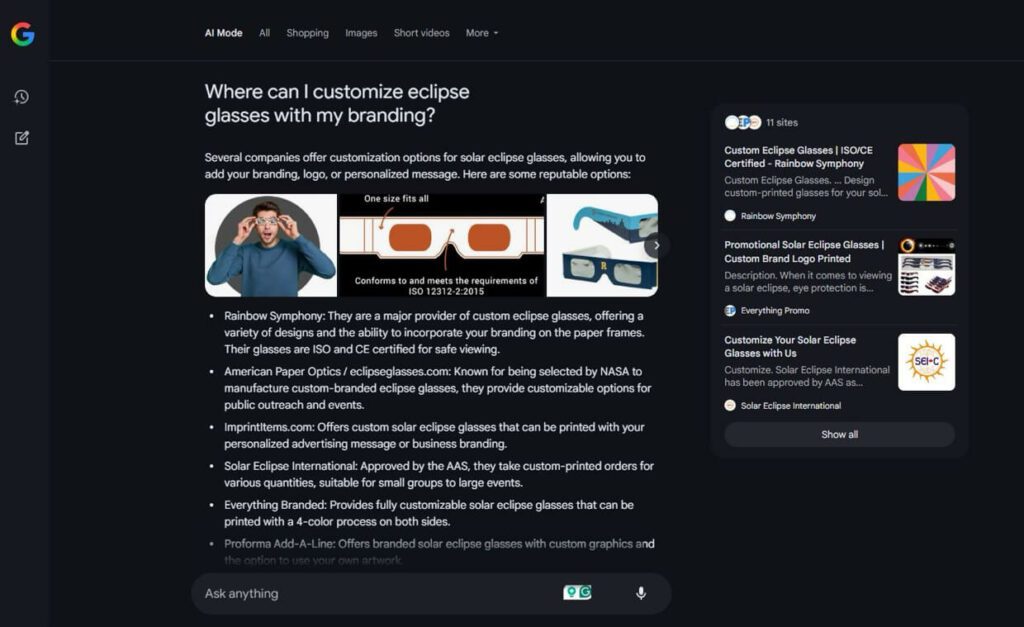
We asked Google AI Mode, “Where can I customize eclipse glasses with my branding?” There are numerous brand recommendations, but our client is at the top of the list. Which brand do you think is most likely to get the click?
Catering AI SEO Strategies to Each LLM
Leveraging data gleaned from thousands of prompts5, let’s examine how each LLM most commonly sources its answers. Understanding the “mindset” of these models will help you plan an effective content strategy for LLM optimization and increase your odds of getting cited.
Google Ecosystem: Comprehensive Aggregation
Let’s start by covering Google’s properties: AI Overviews and Gemini/AI Mode.
Google AI Overviews
Compared to the other big-name models, Google AI Overviews aggregate answers from the broadest range of sources. AI Overviews are most comparable to traditional Google search results.
The majority of citations come from blogs and articles (46%) and mainstream news outlets (20%). In contrast to the others, AI Overviews frequently use community-created content from Reddit, Quora, LinkedIn, and other community forums and sites (4%). Vendor blogs were also noteworthy at around 7%.
Content Strategies:
A solid LLM optimization approach for targeting Google AI Overviews could include deep, authoritative blogs, features on news sites, and organic conversations on community forums.
Google Gemini/AI Mode
Like AI Overviews, Gemini and its integrated application, AI Mode, also pull heavily from blogs (39%), news outlets, and community forums (2%). However, it tends to favor news slightly more than AI Overviews (26% compared to 20%). Notably, YouTube was the most cited website.
Content Strategies:
Gemini and AI Mode are part of the same Google ecosystem as AI Overviews, so that a similar approach will work well. You should focus more on YouTube content if the primary LLM optimization goal is to get cited by Gemini and AI Mode.
ChatGPT: Credibility and Authority
Suppose your AI SEO strategy needs to include ChatGPT optimization. Note that ChatGPT favors established, reputable news and information sites, such as Wikipedia (27%). ChatGPT also pulls from blogs (17%) and comparison engines (17%).
Notably, ChatGPT rarely cites community-created content, such as forums, and fewer than 3% of its citations came from vendor blogs or product pages.
Content Strategies:
Get backlinks in and produce highly authoritative, non-promotional blog content. Try to get featured on reputable news and information sites. Create or improve your Wikipedia page!
Perplexity: Niche Expertise and Reviews
Although LLM optimization isn’t typically as high a priority as it is for Google and ChatGPT, it’s never a bad idea to cover all the bases. Perplexity operates a family of AI models, including its in-house model, Sonar, which we’ll focus on here.
Perplexity tends to favor blogs (38%), news outlets (23%), reputable review platforms (9%), and product blogs (7%). It may occasionally pull from high-quality social forms and community-created content.
Content Strategies:
Try to get reviewed on reputable, relevant review platforms. Create authoritative, beneficial content, such as niche reviews, comparisons, and how-to guides that offer valuable insights. Participate in discussions on popular forums, such as Reddit.
Overcoming the Unbiased Bias
LLM optimization can be challenging for businesses because LLMs tend to favor third-party links over branded links. In theory, it makes sense; you wouldn’t ask Starbucks what company has the best coffee, right? In practice, your click-through rate suffers.
To overcome this hurdle and get cited despite the bias toward unbiased content, AI SEO must prioritize content that embodies E-E-A-T (Experience, Expertise, Authoritativeness, and Trustworthiness).
The goal is to become the primary source for your niche. You can achieve this by creating content that’s brand new and no one can find anywhere else. You need to prove that even though you’re inherently biased, you’re still producing genuinely valuable content.
Reputation management is also a significant component of LLM optimization. Backlinks and mentions from reputable sources go a long way in establishing trust with LLMs.
Utilizing traditional SEO and digital marketing to enhance brand visibility, recognition, and awareness will significantly improve your chances of being cited (not the other way around). Yes, getting cited will enhance your online presence in the long run, but you need to have a strong presence in the first place. LLMs aren’t doing the underdogs any favors!
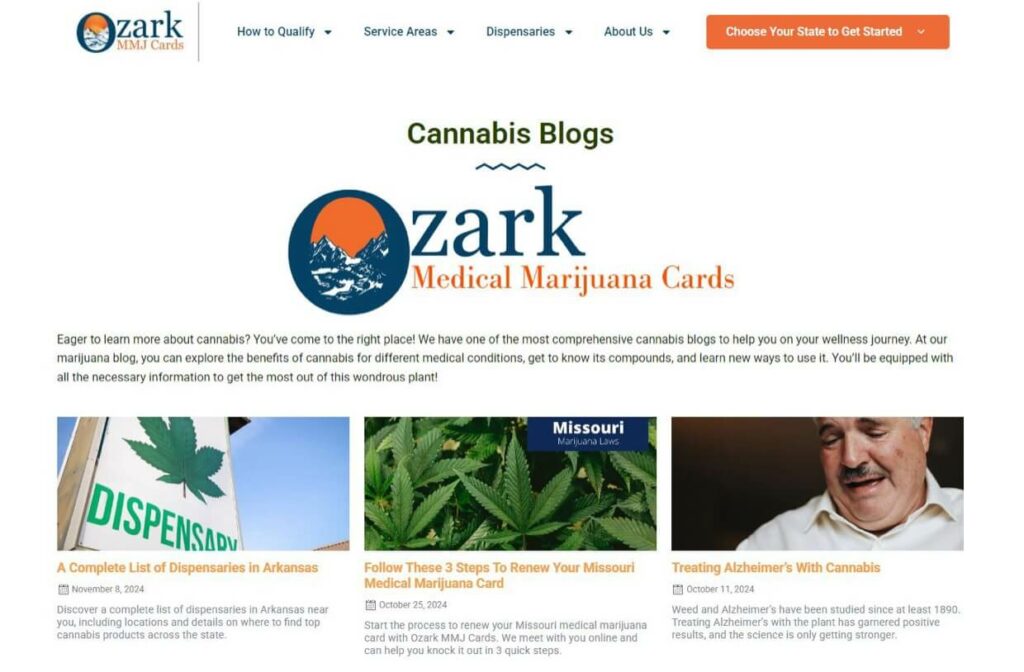
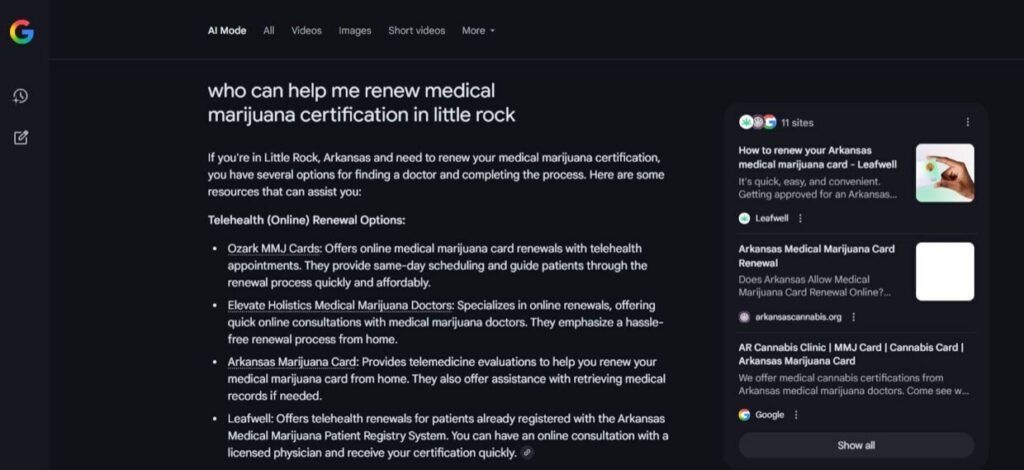
To illustrate how traditional SEO can lead to citations in LLMs, let’s take a quick look at our client, Ozark MMJ Cards. Although we didn’t focus specifically on LLM optimization at the time, we created E-E-A-T content that established the company as a trusted and authoritative resource worthy of citation.
We asked Google AI Mode, “Who can help me renew medical marijuana certification in Little Rock?” As you can see, Ozark MMJ Cards is the first recommendation. That’s not a coincidence! Traditional SEO set the foundation for Ozark MMJ Cards to get the citation.
Let’s Plan Your AI SEO Campaign
LLM SEO is in its infancy, so there’s no better time to stake your claim on AI citations before your competition does first. Whether you’re looking to appear in Google AI Overviews or get started with ChatGPT optimization, we can create a comprehensive, custom-tailored plan tailored to your specific business needs. Contact us for a free consultation about LLM optimization.
References
- https://searchengineland.com/llms-are-disrupting-search-is-your-brand-ready-451031
- https://blog.adobe.com/en/publish/2025/03/17/adobe-analytics-traffic-to-us-retail-websites-from-generative-ai-sources-jumps-1200-percent
- https://searchengineland.com/how-to-get-cited-by-ai-seo-insights-from-8000-ai-citations-455284
- https://searchengineland.com/what-llms-link-to-and-why-it-matters-for-your-brand-454971
- https://searchengineland.com/how-to-get-cited-by-ai-seo-insights-from-8000-ai-citations-455284