The Rundown
- Ranking first is no longer enough. Modern brands win by appearing in as many SERP features as possible, from snippets to AI Overviews and AI Mode.
- AI-generated summaries now appear in nearly half of general search results, and brands that adapt early will dominate both organic and generative search surfaces.
- Structured data and entity resolution unify brand identity across platforms, helping Google and AI models verify and display consistent business information.
- Factual, first-party content backed by case studies and citations builds “content anchors” that LLMs can safely quote and rank.
- Local optimization through Google Business Profiles, schema, and review velocity drives visibility across map packs and “near me” AI summaries.
- Integrating paid and organic strategies fills coverage gaps and strengthens cross-surface click-through rates across multiple engines.
- Coalition Technologies uses data-driven frameworks and visibility dashboards to help businesses show, rank, and lead across every modern SERP feature.
For years, marketers measured success by their ranking. By 2026, that metric will be outdated. Actual performance stems from the number of SERP features your brand occupies simultaneously, such as organic links, AI Overviews, AI Mode, local packs, videos, FAQs, or paid listings.
Today, roughly a third of all search results include at least one rich element¹, while AI summaries appear in nearly half of general queries2 and 17.2% of commercial searches.3
This shift means ranking well isn’t enough. Brands must appear in as many SERP features as possible to consistently reach their target audiences.
Our framework at Coalition Technologies is built around that reality. We’ve helped hundreds of businesses adjust their strategies not just to rank higher but also to appear in more SERP features across Google, Bing, Gemini, Perplexity, and ChatGPT results. This article will therefore explore how you can rank in more SERP features in 2026.
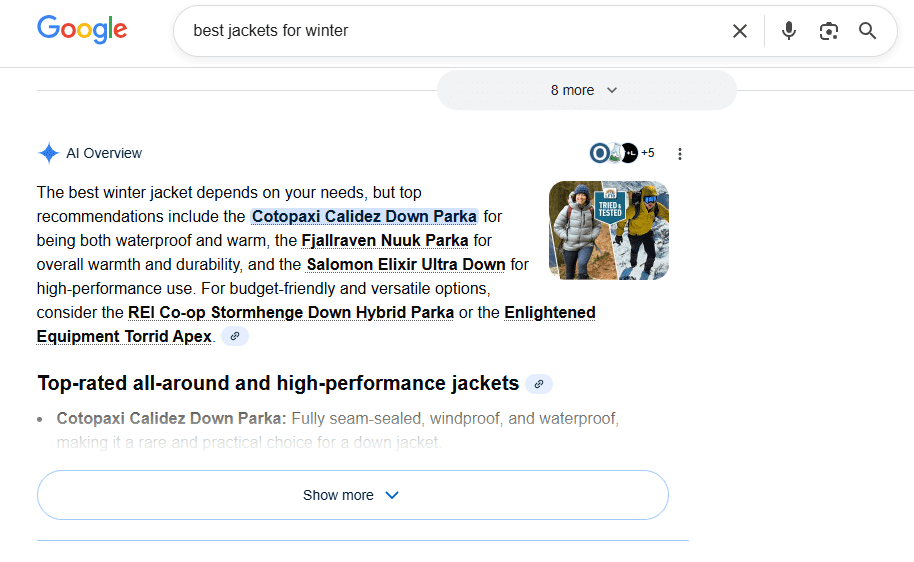
Table of Contents
- 1 Why Visibility Is Fragmented
- 2 Pillar 1: Content Anchors (Building Factual Authority)
- 3 Pillar 2: Technical Entity Resolution (Making Brands Machine Readable)
- 4 Pillar 3: Authority (Signals Beyond Backlinks)
- 5 Pillar 4: Multi-Surface Feature Optimization (Owning Every SERP Format)
- 6 Pillar 5: Local and Geo-Targeted Dominance (Winning Proximity Searches)
- 7 Pillar 6: Paid and Organic Synergy (Filling Visibility Gaps)
- 8 Frequently Asked Questions
- 9 Work With Us
- 10 Sources:
Why Visibility Is Fragmented
Each surface of modern search pulls from a different data source or markup signal. Organic results depend on E-E-A-T and link authority, snippets depend on structured data, and AI Overviews on semantic understanding.
To appear in as many SERP features as possible, you can’t ignore this. Even Bing, Yahoo, and emerging LLM engines like Perplexity or Claude fetch context differently. The upside is that the same foundations we use for Google, such as clean entities, structured data, consistent facts, and verifiable sources, carry over to Bing and Yahoo and even to AI-forward tools like ChatGPT, Perplexity, Gemini, or Claude.
This fragmentation is why so many brands lose ground despite strong rankings. These sites are optimized for traditional SEO, but not SERP feature coverage.
To correct this, we use a Search Visibility Framework, a multi-pillar system that aligns all ranking surfaces under a single unified strategy. Here are the pillars we use.
Pillar 1: Content Anchors (Building Factual Authority)
Every brand that wants to appear in as many SERP features as possible needs to focus on factual consistency. All search engines look for this before deciding what to display. We refer to this building as content anchors, which are pieces of content grounded in verifiable data that LLMs can safely cite.
To show or rank in more SERP features, we reinforce these anchors with first-party research, client studies, and original insights. This ensures that what we publish becomes a reference point for both Google and generative engines.
When your site contains clear evidence of experience and expertise, you not only rank your content but also appear in as many SERP features as possible, such as snippets, FAQs, and AI explanations.
The same factual anchors also determine how you appear in non-Google surfaces. Bing and Yahoo rely heavily on verifiable sources for their answer cards, and AI search tools like ChatGPT, Claude, Gemini, Perplexity, and others prioritize first-party facts when generating citations. Strong factual consistency gives you visibility across all of those systems, not just Google.
Pillar 2: Technical Entity Resolution (Making Brands Machine Readable)
Structured data has evolved into entity mapping. Instead of just marking up pages, Google needs to learn who you are to help you appear in as many SERP features as possible. The entity resolution process combines your website, social profiles, and Google Business Profile into a single, verifiable identity. These signals also carry over to Bing, Yahoo, and AI search tools like ChatGPT and Perplexity.
To achieve this, utilize the Organization, Person, and sameAs schema to unify these signals while maintaining clean HTML that AI crawlers can parse. Developers like ours can do this work at Coalition Technologies.
Of course, mobile-first indexing and fast-loading pages remain essential if you want to appear in as many SERP features as possible. However, they now serve another purpose: they help AI models accurately represent your brand, enabling you to gain visibility in all these SERP features.
Pillar 3: Authority (Signals Beyond Backlinks)
Backlinks still matter, but modern engines such as Google’s AI Overviews and AI Mode, Bing’s answer cards, and AI search tools like ChatGPT are shifting weight towards source credibility and authority, showing a strong correlation between the number of times a brand is mentioned on the web and its appearance in AI Overviews 4
Your brand will appear or rank in more SERP features if it is recognized in structured data (organization schema), mentioned on news sites, cited in factual sources, and verified in your Google Business Profile.
To appear in as many SERP features as possible, we treat authority like a layered ecosystem: backlinks, brand mentions, and factual accuracy all reinforce one another. Our content integrates first-party data and case studies, enabling our clients to build not just links but factual anchors that LLMs can confidently cite.
Pillar 4: Multi-Surface Feature Optimization (Owning Every SERP Format)
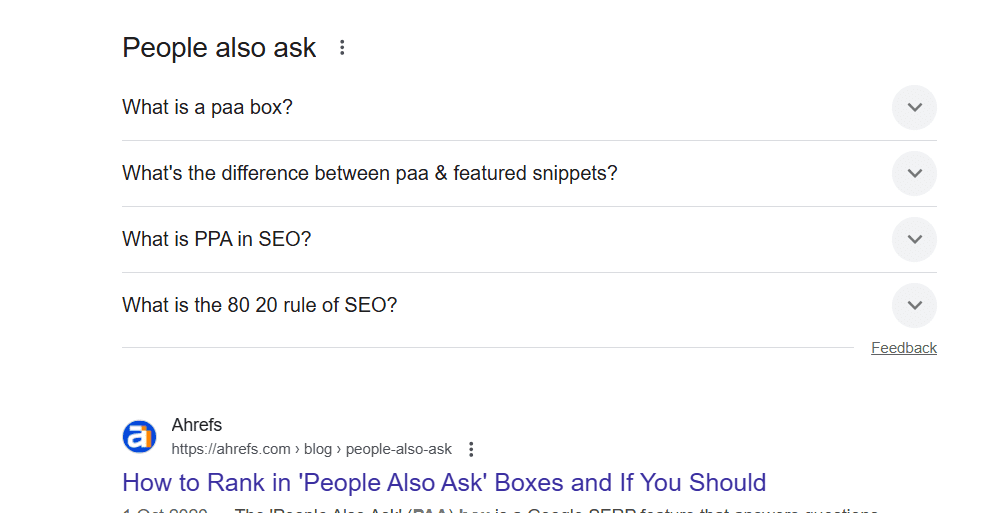
Optimize every format the modern SERP displays. That includes featured snippets, People Also Ask boxes, images, video carousels, and AI summary callouts. This also helps you appear in as many SERP features as possible.
Some ways of doing this include:
- Formatting text into short-answer blocks.
- Adding FAQ and HowToSchema.
- Pairing written guides with short-form video and transcripts
The principle is simple: each format creates a new surface. When you appear on multiple surfaces at once, you will appear in more SERP features and rank higher.
Pillar 5: Local and Geo-Targeted Dominance (Winning Proximity Searches)
A high percentage of searches in Google, Bing, Yahoo, and the LLMs have always had local intent. That’s not changing. In fact, Google is increasingly using review data and business information like ratings and hours in the AI-generated summaries and local listings 5
You can take advantage of this to appear in as many SERP features as possible by optimizing your Google Business Profile down to the attribute level. That means the services, hours, categories, and Q&As.
You should also integrate the LocalBusiness schema, synchronize NAP citations, and track review velocity (the frequency at which reviews appear), which is now a ranking factor in local AI summaries.
For service-area businesses, create localized landing hubs that rank organically and trigger local packs, so that you can appear in as many SERP features as possible for the “near me” and regional queries.
Pillar 6: Paid and Organic Synergy (Filling Visibility Gaps)
Paid and organic channels are now intertwined, and that trend will continue, not just with the traditional search engines, but also with LLMs like ChatGPT and emerging AI search engines. Google’s Search Generative Experience often blends ads into AI answers, creating shared visibility cones. Brands that run consistent ad campaigns send stronger engagement signals, which reinforce their organic authority.
To show or rank in more SERP features, connect Google Ads search-term data with organic data to locate gaps. These could be keywords where ads are effective, but pages lack visibility. By aligning ad copy, metadata, and structured markup, clients increase cost-surface click-through rates.
At Coalition Technologies, we’ve helped our clients appear in as many SERP features as possible, as our internal visibility dashboard tracks each feature type, including snippets, PAA, map, image, video, AI Overviews, and AI Mode. We then calculate the visibility weight score to determine how widely the brand is perceived, not just its ranking.
Want your business to dominate every corner of the SERP?
Frequently Asked Questions
How can brands audit their current visibility across SERP features?
Start with Google Search Console and visual SERP-tracking tools that show where your content appears. At Coalition Technologis, we extend this with a “Visibility Weight Score” that quantifies reach across multiple engines, including AI platforms, to help clients appear in as many SERP features as possible.
How does AI affect branded search?
AI Overviews often condense branded information from multiple sources. When your entity data and public mentions are accurate, and you show or rank in more SERP features, AI summaries echo your preferred brand message instead of conflicting versions pulled from third-party sites.
Is schema enough for AI inclusion?
No. It just helps interpret data, but AI inclusion depends on trust and collaboration. Consistent facts across press mentions, social bios, and structured data create the verification layer that generative systems rely on.
When should paid search support organic coverage?
While the goal is to appear in as many SERP features as possible, use paid campaigns to gather performance signals before investing in organic search engine optimization (SEO) builds. If an ad keyword consistently converts, it’s a signal that creating long-form or multimedia content around it could help open up more SERP real estate organically.
Work With Us
Brands seeking to transition from traditional ranking to full-spectrum visibility turn to Coalition Technologies. Our skilled SEO experts then use the strategies above and others to help our clients appear in as many SERP features as possible.
Through our services, we can do the same for you. Contact Coalition Technologies today to build your AI-first search visibility strategy.
Sources:
- Search Engine Land, “Schema Markup Shows In 36% Of Google Search Results, But Almost No Websites Use It,” 2014
- Search Engine Journal, “Google CTR Study: AI Overviews Rise As Click Rates Decline,” 2025
- Local Falcon, “Whitepaper: The Impact of Google AI Overviews on Local Business Search Visibility, ” 2025
- Ahrefs, “An Analysis of AI Overview Brand Visibility Factors (75K Brands Studied),” 2025
- Google Maps Platform, “Provide AI-powered place and area summaries, with Gemini model capabilities for Places API,” 2024