


- URL : https://www.quadratec.com/
- Business Type : Business to Business, Business to Consumer
- Focus : Ecommerce
- Client Industry : Autos & Vehicles, Parts & Accessories
- Platform : Headless, Shopify Plus
- Services Provided : AI SEO, SEO, Web Design, Web Development
Overview
Quadratec has been selling Jeep parts and accessories since 1990. The brand has grown into one of the largest online destinations for Jeep parts, accessories, replacement components, and expert advice. With this growth, they encountered challenges with the website.
Over the years, Quadratec added systems to support different parts of the business. Product content, inventory, customer records, orders, and fulfillment data were all handled separately. While their systems were not failing, it had become increasingly difficult to manage all of them together. The client wanted a cleaner path forward and sought our help to build a new robust website that preserved many of the features their customers relied on.
See how we built a new Shopify Plus website and helped grow their monthly traffic by 265.4% with our headless web development, SEO, and AI SEO services.
Problem
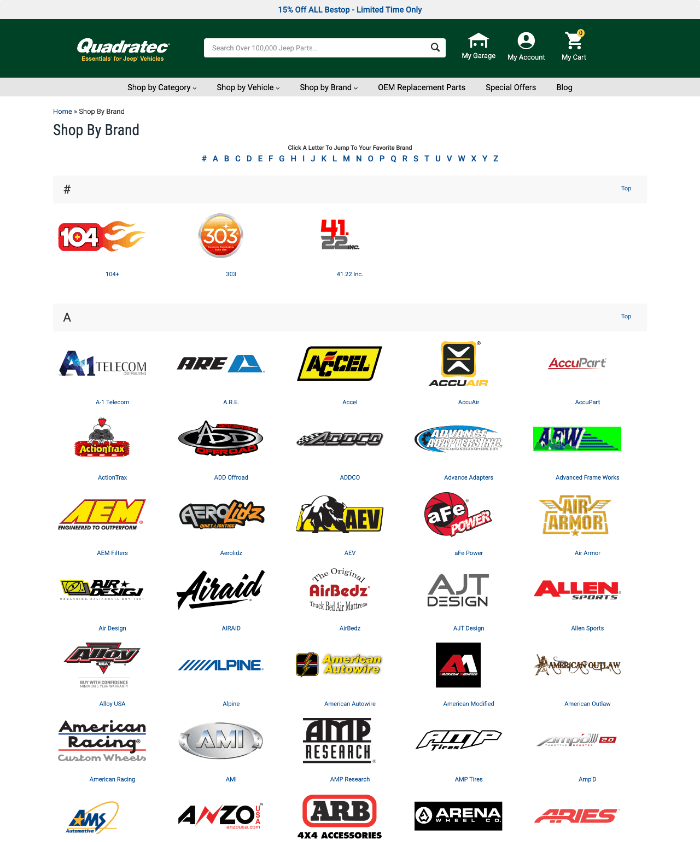
Quadratec’s biggest challenge wasn’t traffic or demand: it was everything happening behind the scenes. Over the years, different systems were introduced to handle product data, another to manage inventory, and another for orders and customer records. Keeping things in sync became difficult as the business scaled.
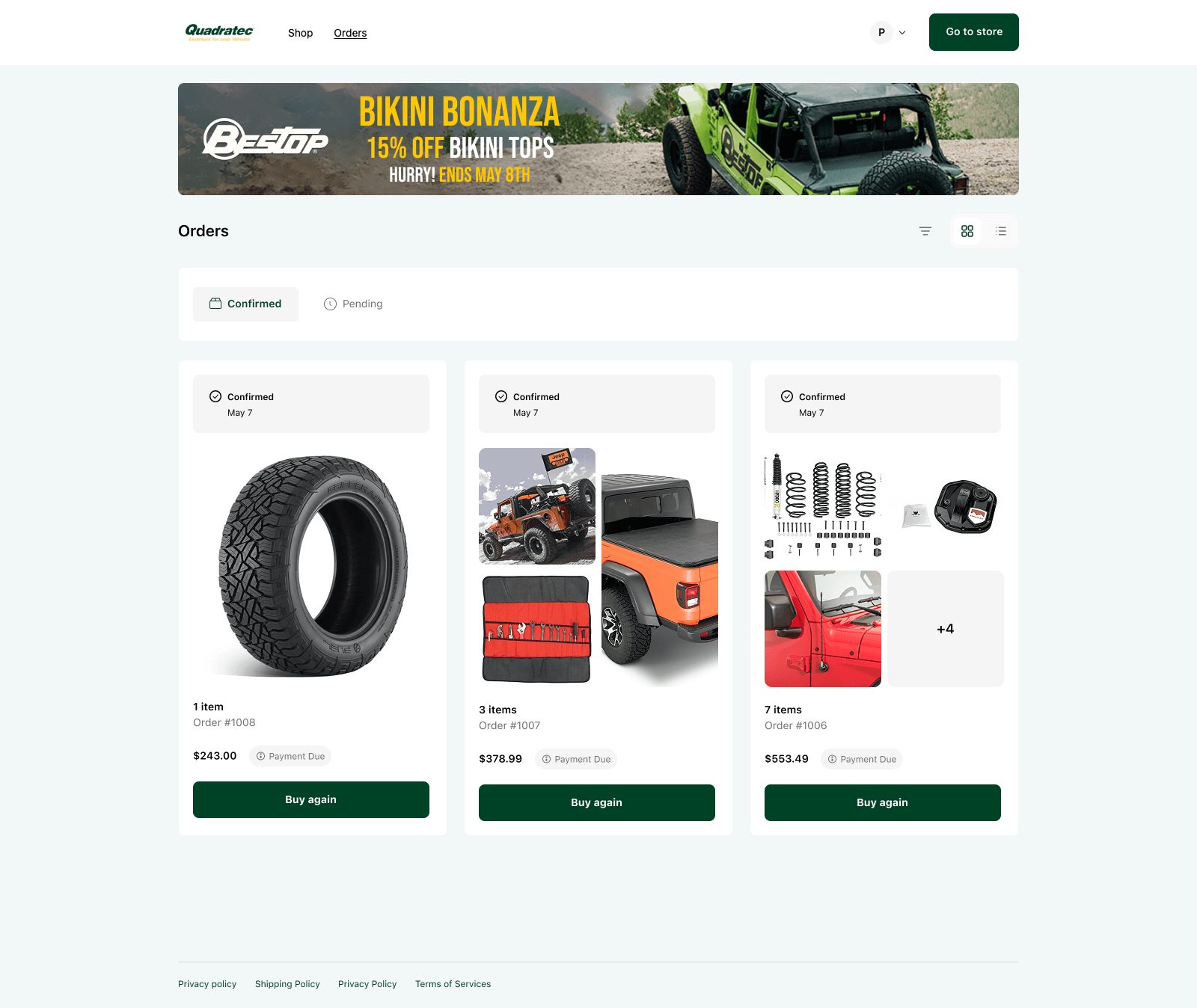
Order management was one example. When a customer placed an order through the website, inventory updates, shipment details, and order status information were updated through different systems, resulting in delays, discrepancies, and extra work.
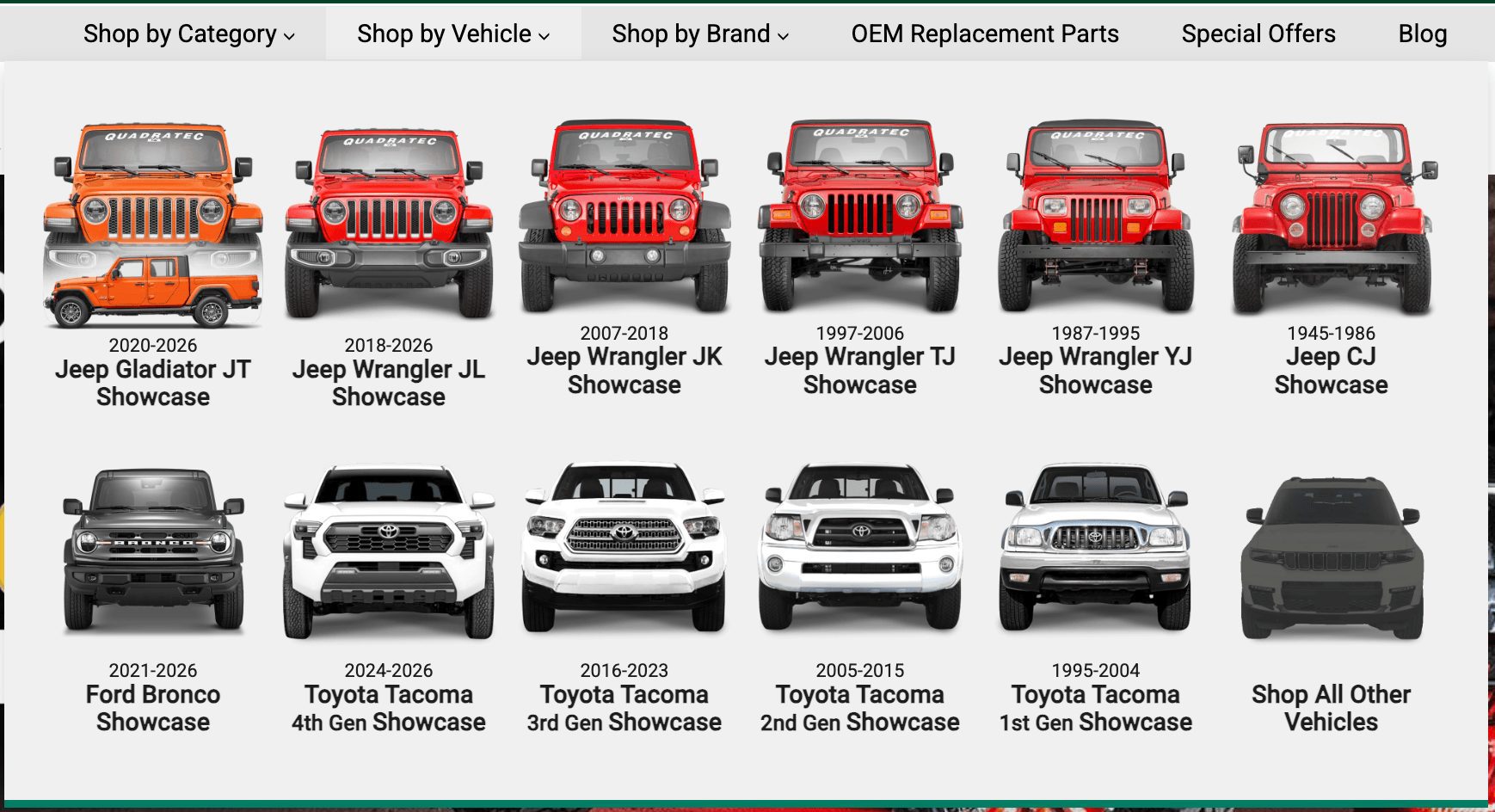
On top of that, Jeep owners shop not only by product name but also by fitment. If they are unable to find their vehicle’s part, they leave the site.
Having both retail and wholesale customers, Quadratec needed different pricing, account rules, and workflows, all without creating confusion between the two experiences.
At the same time, search behavior was shifting. Google was still important, but customers were also starting to use AI tools to research products. Quadratec needed to stay visible in both search engines and AI large language model (LLM) platforms.
Solution
Web Design & Development
We designed and developed a structure that would scale with the business. The first step involved cleaning and organizing large amounts of product data. Product descriptions were reviewed and updated for consistency. This helped simplify future migration efforts while improving the quality of information available to customers.
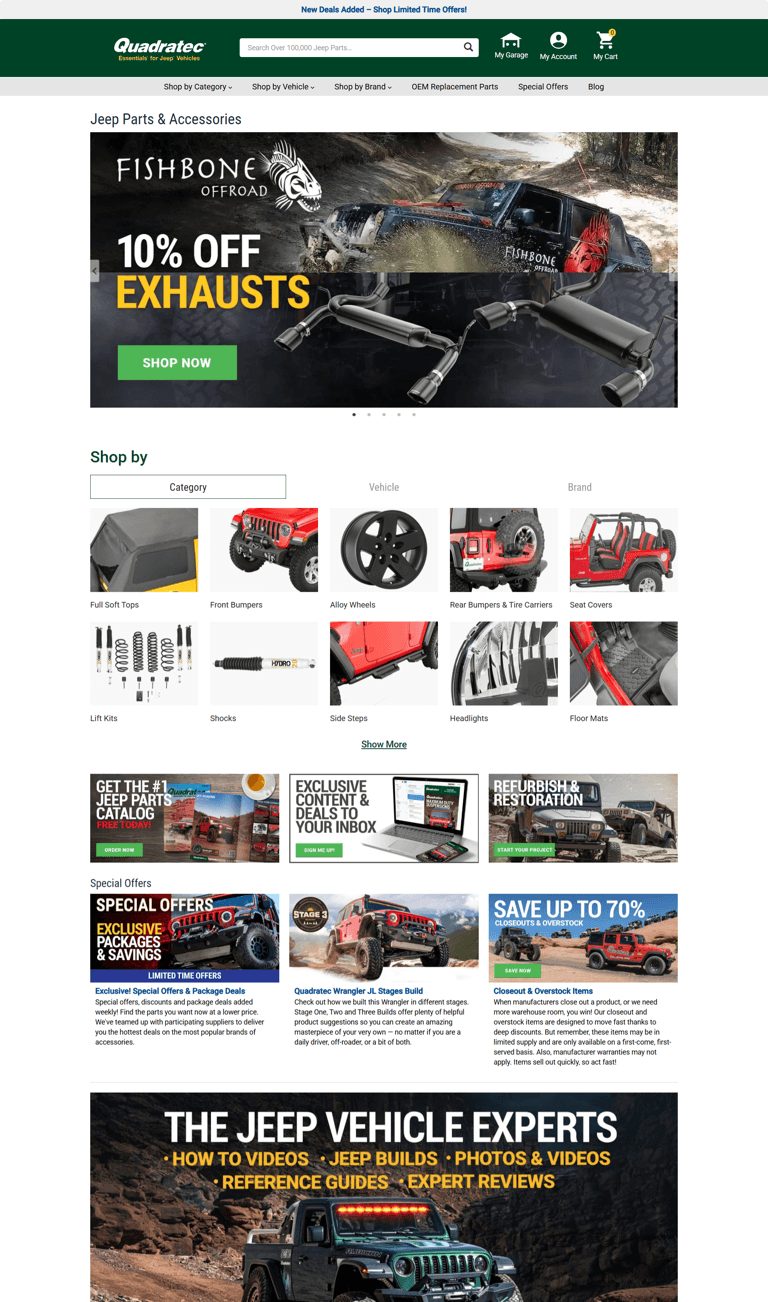
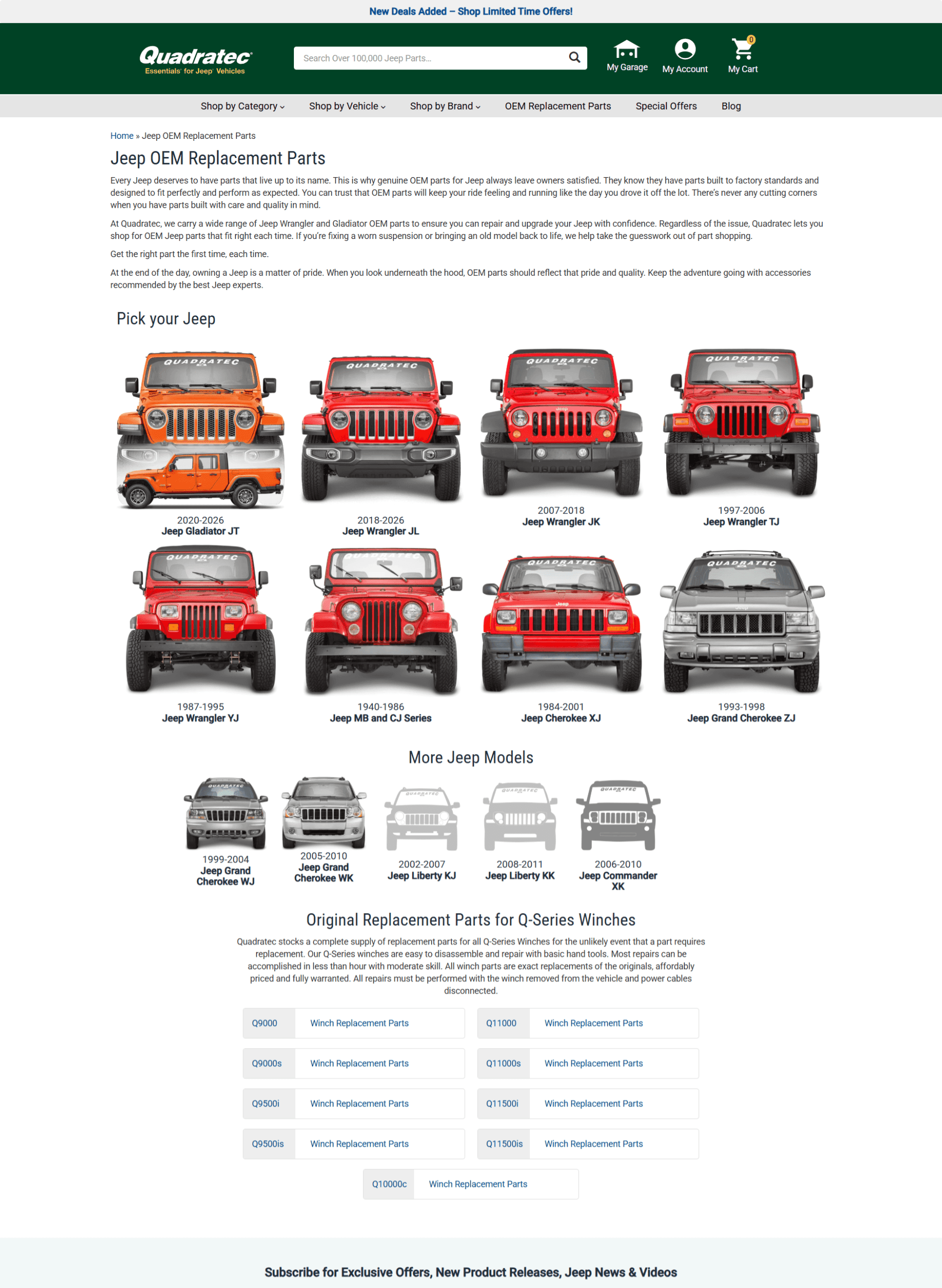
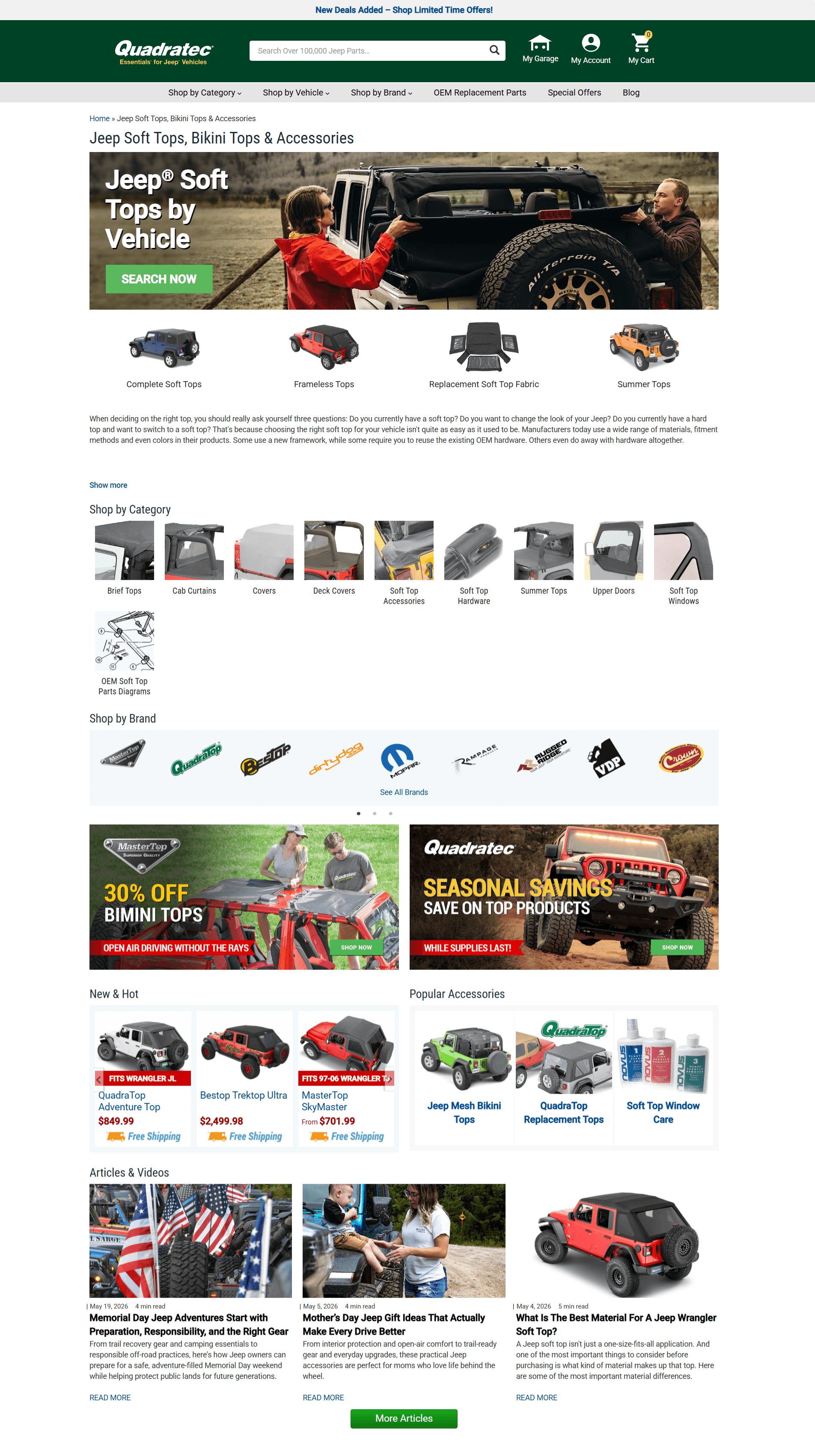
We also worked to preserve and improve the specialized online shopping tools that have become part of the Quadratec experience. Features such as replacement part finders, vehicle-specific product discovery tools, and fitment resources help customers navigate a catalog containing thousands of products.
Custom Functionality
Quadratec customers tend to be deeply involved with their vehicles. Many own more than one Jeep and regularly return to the site for maintenance, restoration, or customization projects.
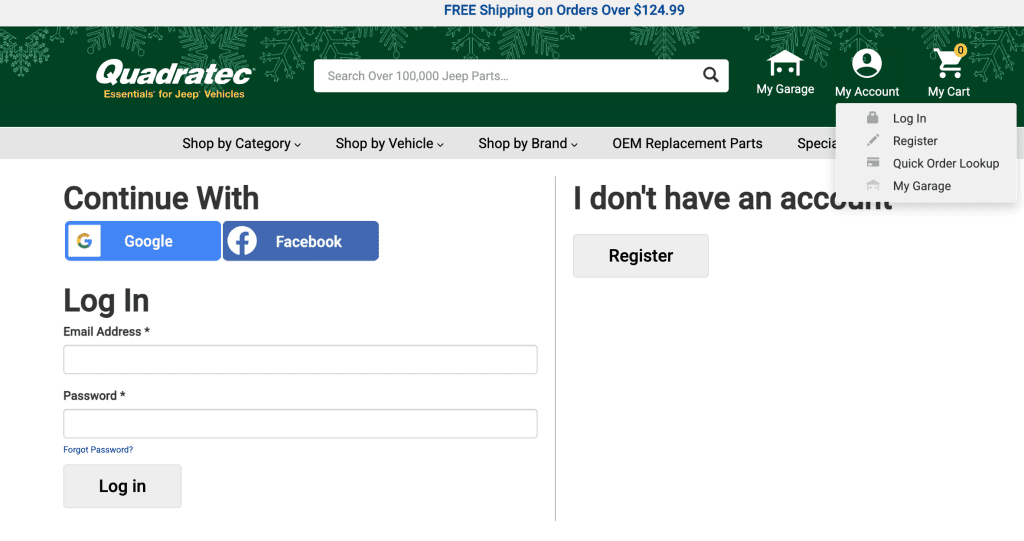
The My Garage feature was introduced as a way for customers to save their vehicle details. Once a vehicle is added, the site starts filtering recommendations based on fitment instead of showing the full catalog. This helped to reduce parts compatibility issues. Repeat visits also became more efficient and focused, leading to quicker decisions and fewer abandoned sessions. Over time, the experience became less about browsing and more about moving directly to the right parts for a specific Jeep setup.
Integrations
The backend system was fragmented as multiple systems handled product data, inventory, orders, and customer records separately. We focused on tightening those connections so data could move between systems more automatically, reliably, and efficiently.
The transition away from Magento meant that historical order and customer data needed to be preserved. We developed a custom migration script to transfer years of legacy order and customer records into the new system, helping preserve important business information during the transition.
One of the more unique aspects of the project was the way Drupal and Shopify were used together. Instead of replacing the frontend experience, Shopify was brought in to handle cart, checkout, and order management while Drupal remained the customer-facing layer. This gave Quadratec a modern commerce platform without having to give up the functionality and content experience they had built over time.

Celigo NetSuite Inventory Sync
We implemented a Celigo integration between NetSuite and the storefront. Celigo’s integration framework enabled real-time inventory synchronization, helping ensure that stock levels reflected actual warehouse levels while creating a more reliable flow of data across systems.

NetSuite Inventory Item to Simple Product
Because product data lived in multiple systems, NetSuite was established as the primary source of truth for SKU-level information. Inventory items were mapped directly into storefront products so that descriptions, compliance details, and wholesale pricing tiers could stay consistent across channels without requiring separate updates in each system.
NetSuite Item Group Main Line to Simple Product
Bundled products created ongoing fulfillment and reporting issues because they were not being represented consistently across systems. To solve this, NetSuite item groups were converted into individual line items in the storefront so that orders, invoices, and shipments reflected how products are actually picked and shipped from different locations.

Avalara Tax
Manual tax rules had become difficult to maintain across multiple regions. Avalara was integrated to automate sales tax calculation and ensure consistent, compliant tax handling at checkout without relying on manually managed rule sets.

Order Management & Customer Tools (Order Printer Pro & Revize)
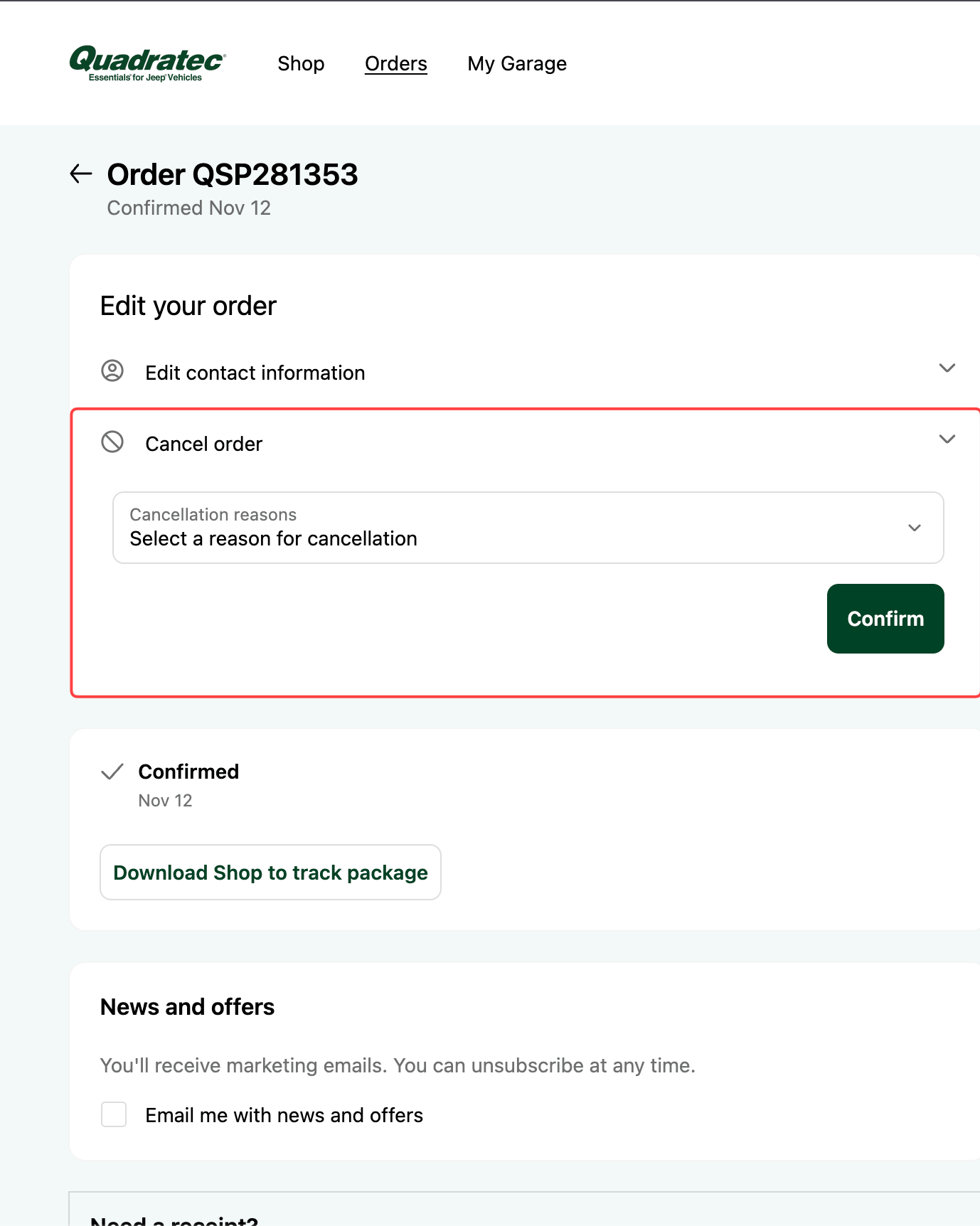
Order management tasks such as cancellations, refunds, and invoice access were creating unnecessary customer support load. Order Printer Pro and Revize were configured to streamline these workflows so customers could download invoices instantly and complete eligible actions through automated self-service processes.

GOVX ID Verification
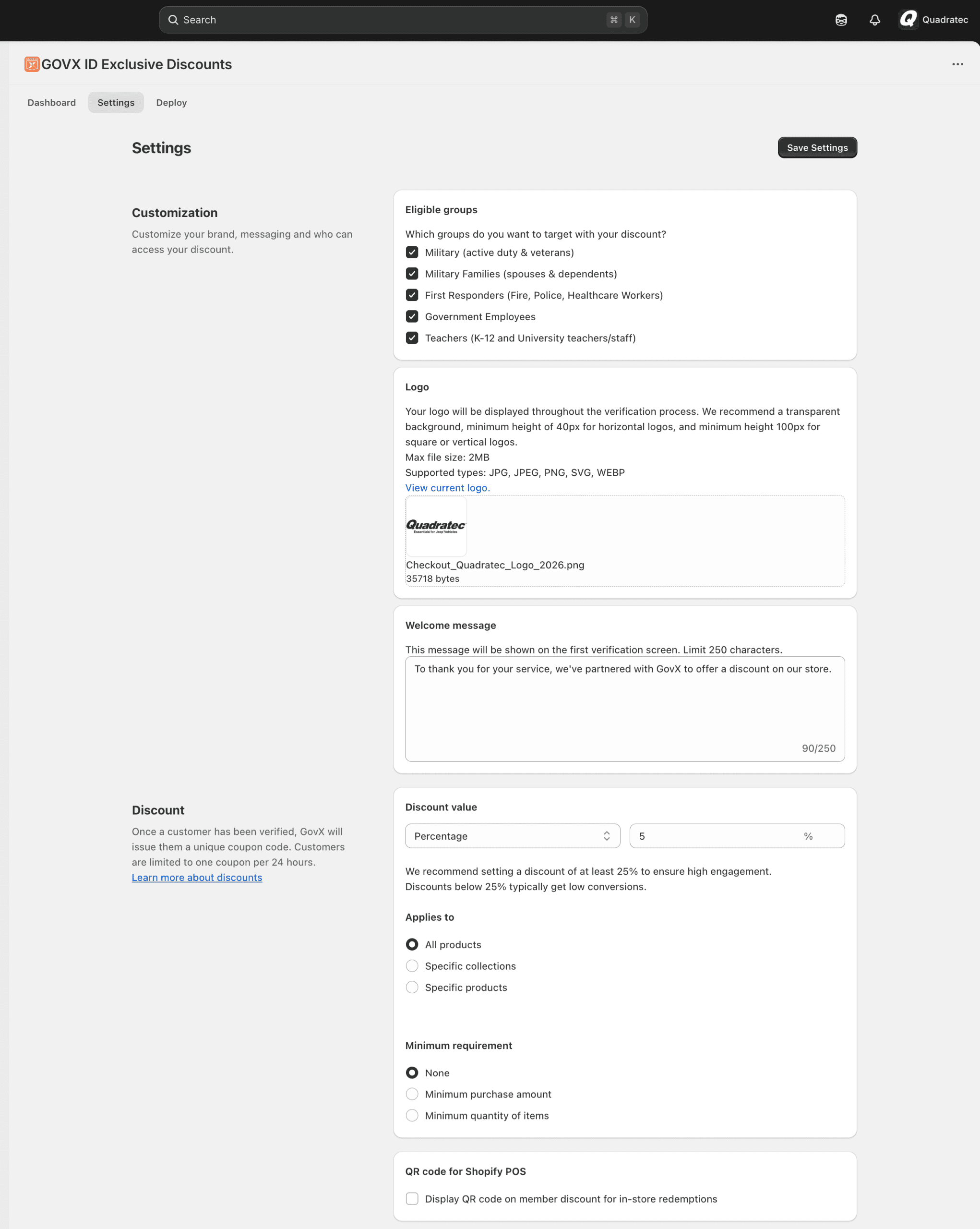
To support promotional programs without increasing fraud risk, GOVX ID was added to verify eligibility for military members, first responders, healthcare workers, and teachers. This allowed discounts to be applied automatically at checkout based on verified status.

Shipping Insurance App
Shipping protection was previously limited by rigid, table-based rules that did not reflect real order conditions. A custom shipping insurance solution was introduced using a Gadget-based framework to make protection rules more flexible and better aligned with actual shipping variables.
SEO AND AI SEO
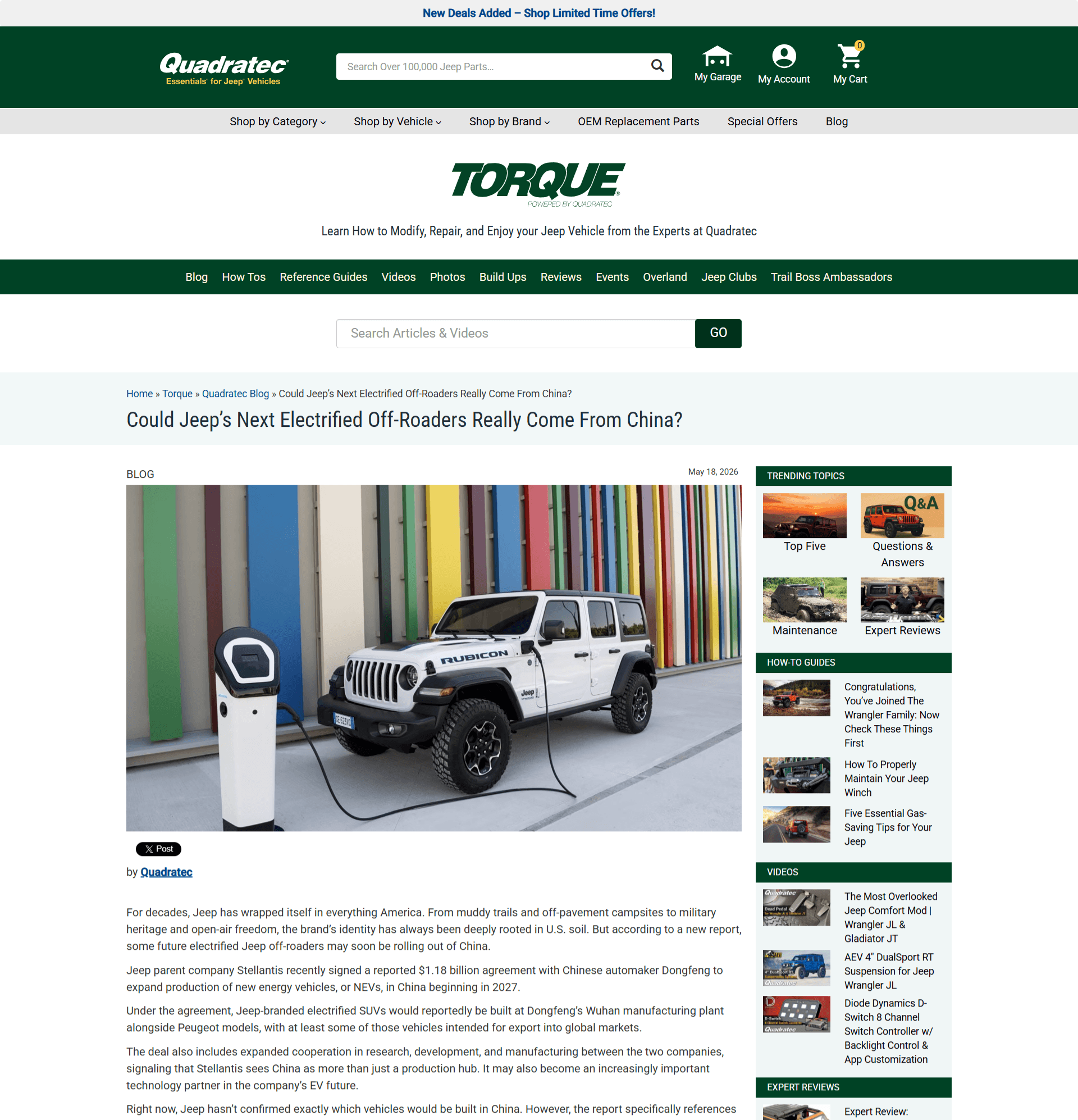
The goal of the SEO and AI SEO strategy was straightforward: help customers find Quadratec wherever they were searching. The site had grown over time, so pages needed to be reorganized for both users and search engines. We cleaned and optimized product and category pages. Content was also refined across key pages and metadata was updated.
As AI tools started influencing how people search, the content strategy shifted slightly. Pages were rewritten in a more natural tone so they better matched conversational queries. Common customer questions were added directly into key pages, and structured data was implemented to help search engines and AI systems better understand the content.
Outreach efforts were used to earn relevant backlinks. Some came through PR placements and editorial mentions. Others came from reclaiming unlinked brand references already existing across the web. Over time, these helped strengthen the site’s overall authority in search.
Final Product
Results
In the first couple of months, visibility grew. Google Search Console showed more than 9 million impressions and 193,000 clicks during that period. Rankings also started to shift upward, reaching position 8.40. This helped Quadratec appear in more Jeep-related searches than before.
At the same time, traffic sources started to grow. Alongside traditional organic growth, AI-driven tools began sending measurable traffic to the site. ChatGPT was the largest contributor here, with additional sessions coming from Microsoft Copilot and other AI platforms. In total, these channels saw a 19.5% month-over-month and 83.9% year-over-year increase in revenue.
Conversion performance had improved meaningfully by the 7th month. Conversion rates reached 5%, and transaction volume continued to climb alongside overall traffic growth, which grew to more than 5.3 million sessions. Total site traffic increased by a massive 265.4% month-over-month and 263% year-over-year.
9,000,000
Impressions
83.9%
Revenue Increase
year-over-year
265.4%
Site Traffic
increase month-over-month